
 English
  Français
  Español
  Português
  عربى
عربى  Türk
Türk  हिंदी
हिंदी Industrial Air Coolng Units Suppliers
An air-cooled unit cooler uses ambient air as the cooling medium. It features a simple structure and flexible installation, widely used in cold storage and small-to-medium cooling systems.

An air-cooled unit cooler uses ambient air as the cooling medium. It features a simple structure and flexible installation, widely used in cold storage and small-to-medium cooling systems.
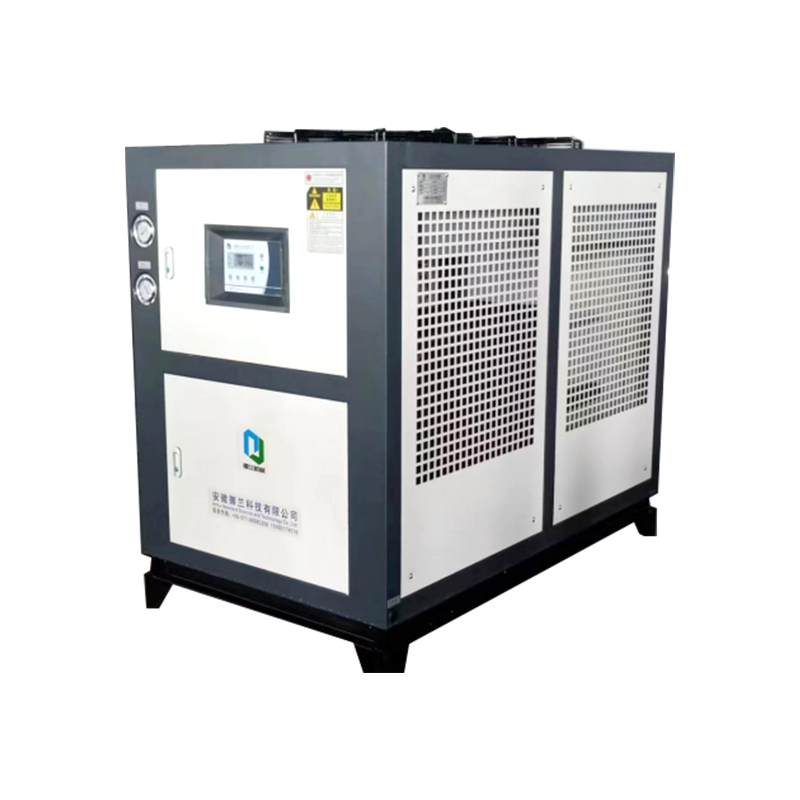


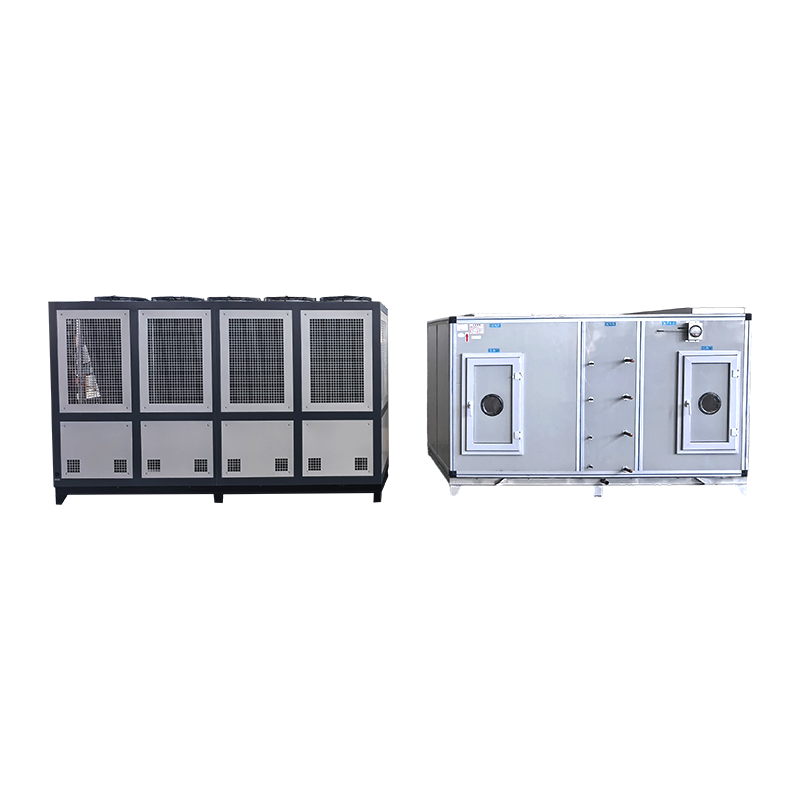
Hangzhou Noran Machinery Equipment Co., Ltd. is China Industrial Air Coolng Units Suppliers and air cooling system manufacturerss, founded in 2014, focusing on the R&D and manufacturing of high-end refrigeration equipment. In 2021, Anhui Noran Technology Co., Ltd. was established, with a 50-mu production base built in Mingguang, Anhui Province, continuously upgrading capabilities in R&D, manufacturing and project delivery.
Noran mainly supplies industrial water chillers, air coolers, mold temperature control systems, explosion-proof refrigeration units and magnetic levitation centrifugal units. Its products are widely used in powder coating, plastic mould, electronic photovoltaic, pharmaceutical chemical and other industries. Supported by technological innovation, university cooperation and patent reserves, we are committed to providing customers with stable, energy-saving and customizable industrial temperature control solutions.
 More About Us
NORAN
More About Us
NORAN

0+
years
Industry Experience

0+
Patent Certification

0+
Number of Employees

0
㎡
Factory Area













News & Insights

2026-10-10
2026-10-10
2026-10-10
2026-10-10
2026-10-05
Choosing between an air cooled air cooler for factory temperature control and a water cooled unit is one of the first decisions a plant engineer faces when planning a workshop cooling project. Both options can deliver reliable cooling, but they differ in heat rejection method, installation requirements, water consumption, maintenance demand, and long-term operating cost. As an industrial air cooling equipment manufacturer, Anhui Noran Technology Co., Ltd. helps customers compare these two technologies based on actual cooling capacity, temperature accuracy, operating environment, and installation conditions.
An air cooling unit rejects heat directly to the ambient air through a finned coil and fan. The refrigerant condenses inside the coil, and the fan moves outdoor air across the surface. A water cooled unit, by contrast, rejects heat to a water loop, which then carries that heat to a cooling tower, dry cooler, or another heat rejection device.
Installation conditions often decide the final choice. Air cooled units need open space, good ventilation, and sufficient distance from walls or other equipment. Water cooled units need a water source, piping, a pump station, and a cooling tower or similar heat rejection system, which increases layout complexity.
Air cooled cooling solutions are sensitive to ambient conditions. On a hot summer day, condensing temperature rises and cooling capacity drops. Water cooled systems are less affected by ambient air temperature because the cooling tower can approach wet-bulb temperature, which is usually lower than dry-bulb temperature.
Water consumption is a decisive factor in regions with limited water supply or strict discharge rules. Air cooled systems use no process water for heat rejection, while water cooled systems consume water through evaporation, drift, and blowdown.
Maintenance profiles differ significantly. Air cooled units require regular coil cleaning, fan and motor inspection, and electrical checks. Water cooled units add water treatment, filter cleaning, pump maintenance, and cooling tower service. In dusty workshops, coil cleaning frequency increases for air cooled equipment.
Energy use depends on climate, load profile, and system design. Water cooled systems often use less compressor power in hot climates because of lower condensing temperatures, but they add pump and cooling tower fan power. Air cooled systems avoid those auxiliary loads but may consume more compressor power at high ambient temperature.
| Comparison Item | Air Cooled Air Cooler | Water Cooled Unit |
| Heat rejection method | Refrigerant to ambient air | Refrigerant to water, then to air |
| Water consumption | None for condensing | Evaporation, drift, and blowdown |
| Cooling tower required | No | Yes |
| Installation complexity | Lower | Higher, requires piping and pumps |
| Ambient temperature sensitivity | High | Low to moderate |
| Condensing temperature | Follows dry-bulb temperature | Can approach wet-bulb temperature |
| Typical cooling capacity range | Small to large, modular | Medium to very large |
| Temperature control accuracy | Good | Better in high-load applications |
| Maintenance scope | Coil, fan, motor, electrical | Adds water treatment, pump, tower |
| Footprint | Larger open air space needed | Larger overall system footprint |
| Energy profile | Higher compressor power in hot weather | Lower compressor power, added auxiliary power |
| Best suited for | Water-scarce sites, simple installation | Hot climates, high loads, large capacity |
The right choice depends on the specific project. An industrial workshop cooling system in a water-scarce region may favor air cooled equipment, while a large chemical or pharmaceutical plant with high cooling loads and available water may favor water cooled designs. Air cooled air cooling units for cooling system projects are often preferred when installation simplicity and low water use matter most.
Anhui Noran Technology Co., Ltd. was founded from Hangzhou Noran in 2014 and moved to Anhui in 2021, establishing an approximately 33000 m2 production base in Mingguang City, Anhui Province. The company designs and manufactures industrial chillers, air cooling systems, screw chillers, low-temperature refrigeration units, heat recovery systems, explosion-proof refrigeration equipment, and customized cooling solutions. Its products serve plastics, powder coating, electronics and photovoltaics, pharmaceuticals, chemicals, industrial painting, and large-scale industrial projects.
As an air cooling system supplier, Anhui Noran Technology Co., Ltd. provides air cooling solutions for manufacturer processing based on cooling capacity, temperature accuracy, operating environment, and installation conditions. The company focuses on energy-saving refrigeration technologies, low-temperature cooling, intelligent temperature control, and customized system integration, delivering stable, efficient, and professional refrigeration solutions worldwide.
Q1: How do I decide between an air cooled air cooler and a water cooled unit for my workshop?
A: Start with four factors: local climate, water availability, cooling load, and installation space. If water is scarce or piping is difficult, an air cooled cooling solution is usually more practical. If the plant has high cooling loads, hot ambient conditions, and reliable water supply, a water cooled unit may deliver better efficiency. Anhui Noran Technology Co., Ltd. evaluates cooling capacity, temperature accuracy, operating environment, and installation conditions to recommend the most suitable configuration, and can supply either air cooled or water cooled designs within one integrated refrigeration solution.
Q2: Are industrial air cooling units suitable for high-temperature workshops?
A: They can be, but performance depends on ambient temperature and coil cleanliness. In very hot climates, capacity may drop during peak hours, so oversizing or hybrid designs may be needed. Anhui Noran Technology Co., Ltd. manufactures industrial air cooled refrigeration machines and industrial air cooling units designed for demanding environments, and provides air cooled air cooler for factory temperature control solutions that match actual heat load and site conditions. Regular coil cleaning is essential in dusty or oily workshops.
Q3: What support does Anhui Noran Technology Co., Ltd. provide for air cooled and water cooled projects?
A: Anhui Noran Technology Co., Ltd. provides integrated support from selection and design to manufacturing, quality control, and project delivery. The company specializes in industrial chillers, air cooling systems, screw chillers, low-temperature refrigeration units, heat recovery systems, explosion-proof refrigeration equipment, and customized cooling solutions. For customers comparing an air cooled cooling system with a water cooled alternative, the engineering team reviews load profiles, site conditions, and utility costs to deliver a reliable and energy-efficient solution tailored to each application.
Contact Us

Jenny@nolantech.cn
amy.wang@nolantech.cn
cici.yuan@nolantech.cn

+86-4001001078

+86-15990174016

+86-13677629472

+86-13677629472 (Amy) / +86-18226838248 (Cici)

No.60 Harmony Road,Green Coating Supporting Industrial Park, Mingguang City,Chuzhou City,Anhui Province, China
Ready to Begin?
Get in Touch

Now!
Custom Air Cooled Cooling System Company

ANHUI NORAN