Why Choose an Air-Cooled Industrial Chiller for Your Manufacturing Facility?

Home / Blog / Industry News / Why Choose an Air-Cooled Industrial Chiller for Your Manufacturing Facility?

Why Choose an Air-Cooled Industrial Chiller for Your Manufacturing Facility?


Content

INDUSTRIAL COOLING GUIDE

A Practical Cooling Strategy for Modern Manufacturing

An air cooled industrial chiller provides controlled cooling for manufacturing equipment, production processes, and industrial circulation systems without requiring a dedicated cooling tower. By transferring heat to the surrounding air, this equipment can simplify plant utilities, reduce dependence on cooling water infrastructure, and support flexible equipment placement.

For factories evaluating a new cooling installation, the decision involves more than comparing refrigeration capacity. Heat loads, ambient temperatures, operating schedules, ventilation, maintenance access, and long-term energy consumption all influence system performance. A suitable air cooled industrial chiller should match the actual thermal demands of the process while remaining practical to install, operate, and maintain.

01Cooling capacity assessment
02Facility integration
03Lifecycle cost planning
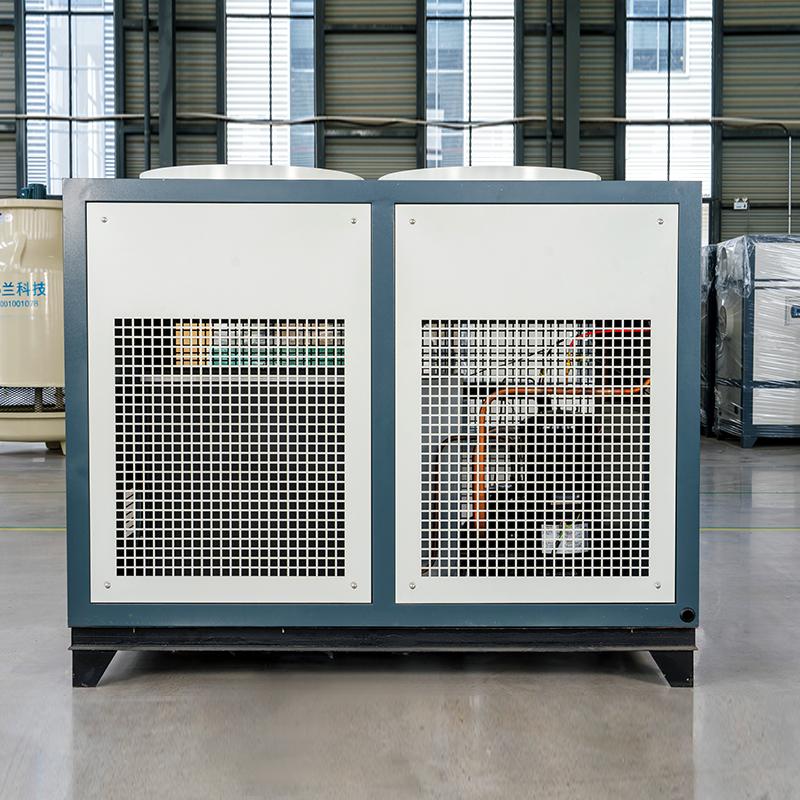
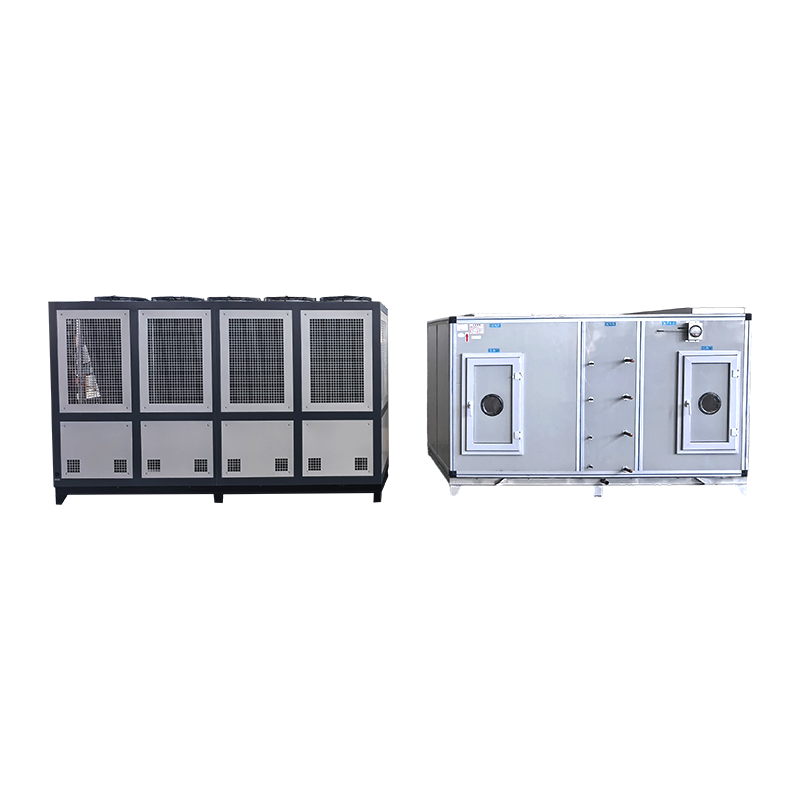
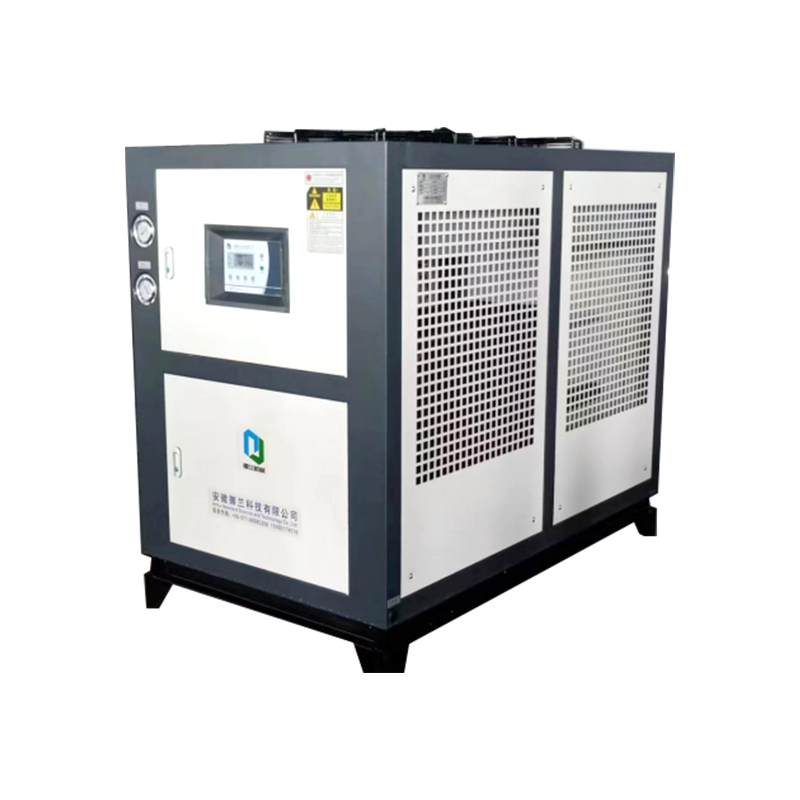
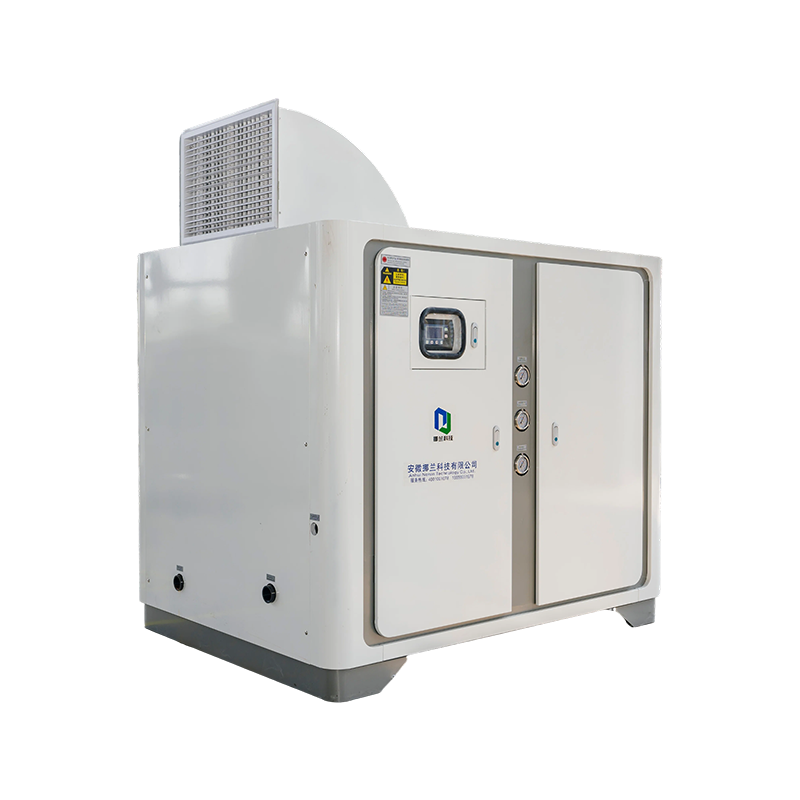
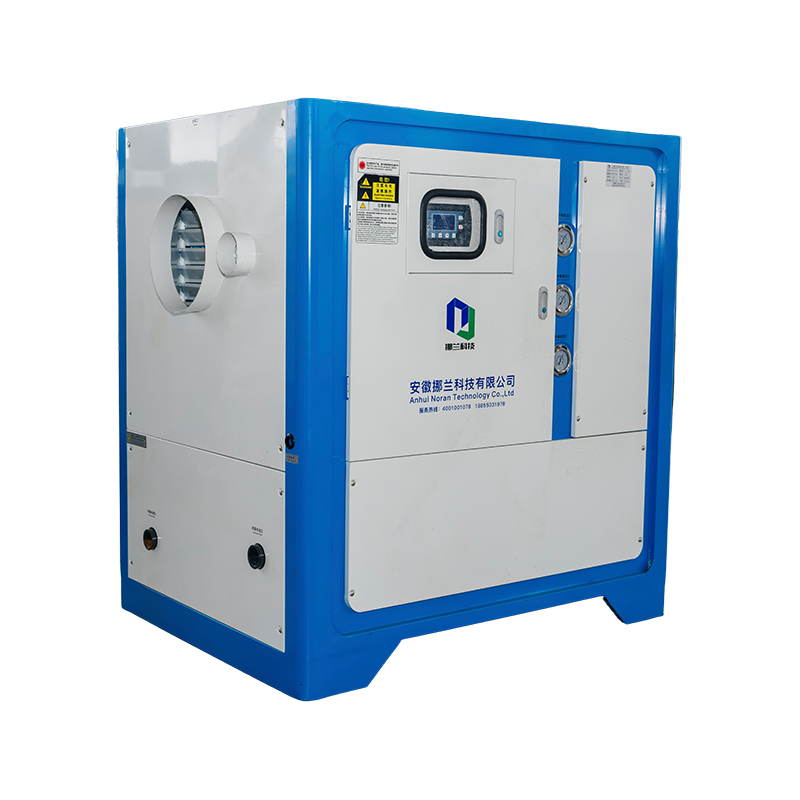
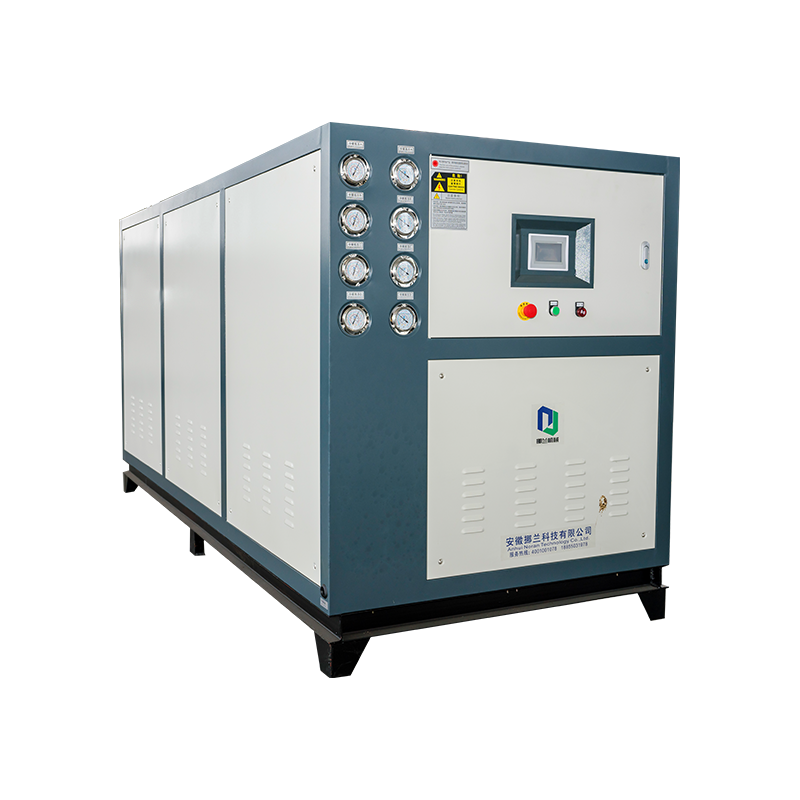
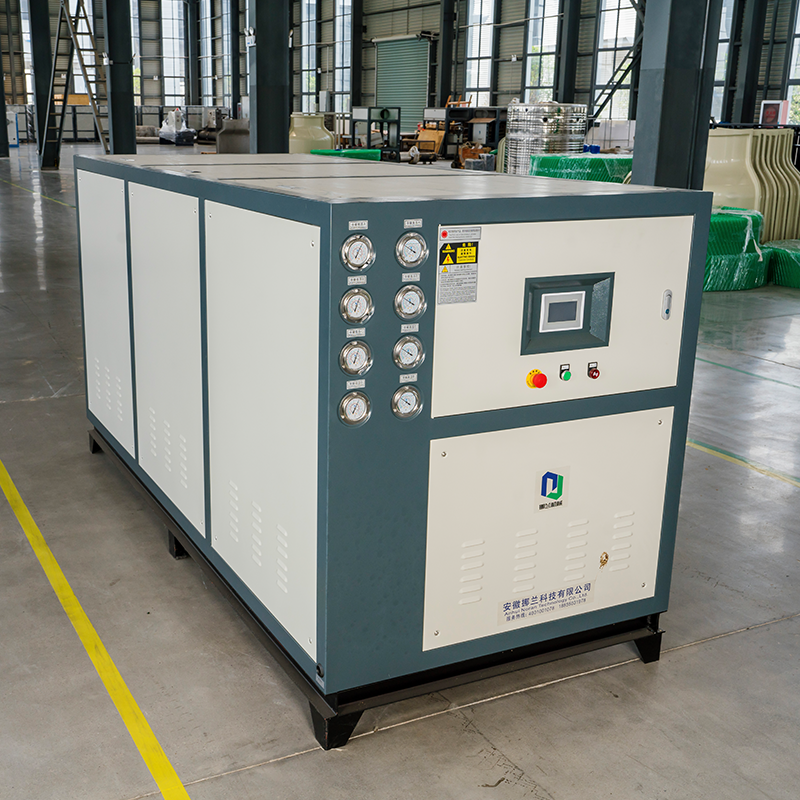
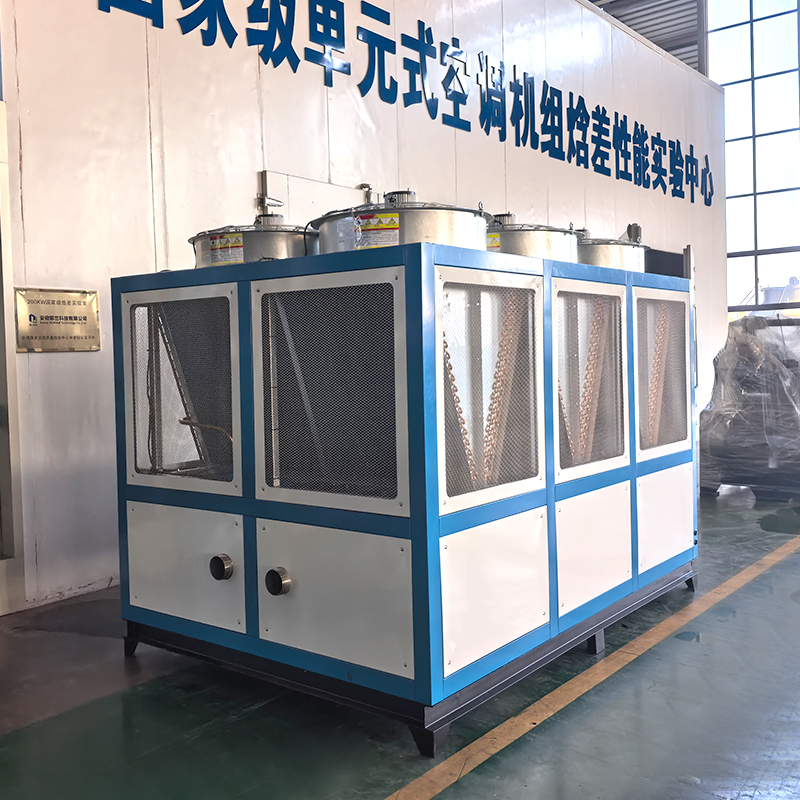
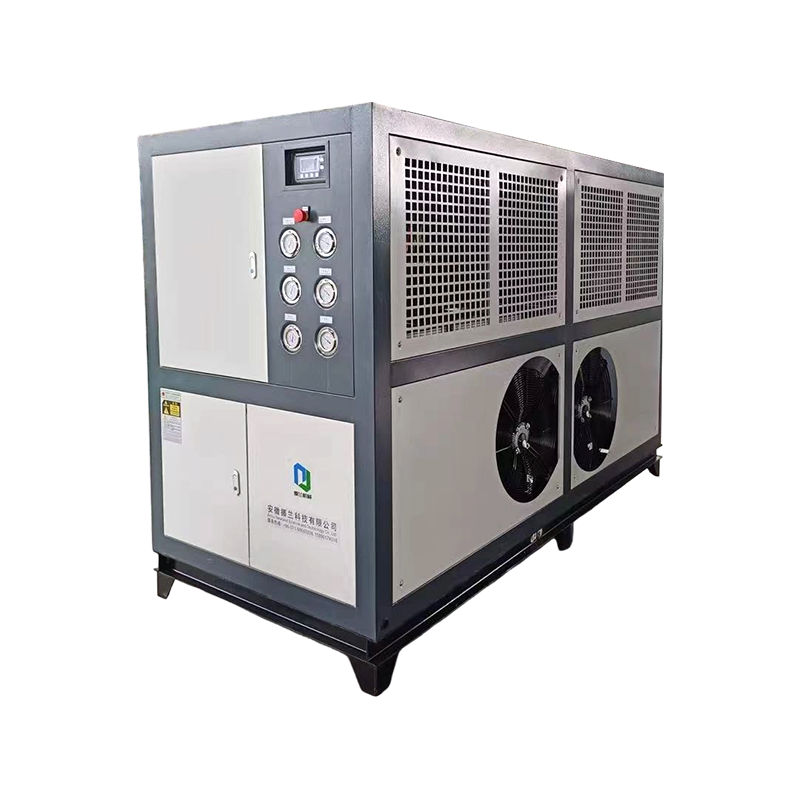
Air cooled industrial chiller equipment for manufacturing process cooling
Air cooled refrigeration equipment can serve production machinery, circulation loops, and dedicated process cooling networks.

1. How an Air-Cooled Industrial Chiller Supports Factory Operations

Manufacturing equipment frequently generates heat that must be removed to maintain stable operating conditions. CNC machining centers, laser processing equipment, plastic molding machines, packaging lines, chemical processing systems, and industrial testing equipment can all require dependable temperature control. Excess heat may affect dimensional accuracy, cycle consistency, component life, or the quality of finished products.

An air cooled water chiller removes heat from a circulating liquid, commonly water or an appropriately formulated water-glycol mixture, and rejects that heat through an air-cooled condenser. The cooled liquid then travels to the equipment or process that requires temperature control. The warmed return liquid flows back to the chiller for further cooling.

A

Controlled temperatures

Maintains a defined coolant supply temperature to help production equipment operate within its specified thermal range.

B

Independent heat rejection

Uses ambient air instead of a dedicated cooling tower and its associated condenser-water circuit.

C

Flexible installation

Supports indoor cabinet configurations and outdoor installations where adequate airflow, service clearance, and environmental protection are available.

D

Process separation

Allows a dedicated cooling loop to be designed around specific equipment requirements instead of relying entirely on a shared plant utility.

These benefits depend on correct system selection. An undersized unit may struggle during peak production or hot weather, while an oversized system may experience inefficient cycling, unnecessary capital expense, or poor control at low loads. The design must therefore reflect real operating conditions rather than nominal cooling capacity alone.

2. Five Reasons Manufacturers Choose Air-Cooled Cooling Systems

Reduced dependence on cooling water infrastructure

A conventional water-cooled installation generally needs a condenser-water circuit and a suitable heat-rejection arrangement, often including a cooling tower. An air cooled cooling system rejects heat directly to the surrounding air, eliminating the need for that dedicated tower and condenser-water infrastructure. This can simplify projects where water availability, tower placement, or building services are constrained.

The chiller still requires an appropriate process-fluid circuit, and some facilities may use additional pumps, tanks, filters, or heat exchangers. The benefit is a simpler heat-rejection arrangement, not the complete elimination of water or other utilities from the plant.

More flexible equipment placement

Air cooled units can be installed on suitable outdoor pads, service areas, or ventilated plant spaces. This flexibility is useful when retrofitting a factory that cannot easily accommodate a cooling tower. However, outdoor exposure, condenser airflow, noise restrictions, access routes, and the distance between the chiller and the cooled equipment must be evaluated before selecting a location.

More straightforward maintenance planning

Maintenance usually focuses on condenser coil cleanliness, fan operation, refrigerant-circuit integrity, electrical connections, filters, pumps, and the condition of the process-fluid circuit. Without a dedicated cooling tower, certain water-treatment and tower-cleaning tasks are no longer required. The remaining maintenance schedule should still reflect operating hours, dust levels, ambient conditions, and manufacturer instructions.

Modular expansion opportunities

A growing plant may add another chiller to serve a separate production line or provide staged capacity for a larger distribution loop. Modular expansion can help limit disruption to existing production, provided that the electrical supply, piping headers, controls, and physical space are designed for future growth.

Better alignment with self-contained production areas

Factories with distinct thermal loads can use dedicated cooling arrangements for different process zones. A machine shop, molding department, and testing laboratory may require different coolant temperatures or flow characteristics. Separating these circuits can improve control and fault isolation, although it may introduce additional equipment and maintenance responsibilities.

Selection principle: The main advantage is often reduced system complexity and installation flexibility. Actual energy savings and operating costs depend on the required temperatures, local climate, equipment efficiency, and the design of the complete cooling network.

3. Compare Cooling Options Before Choosing a Chiller

Air cooled and water cooled chillers can both serve industrial process cooling, but their infrastructure requirements differ. The appropriate choice depends on the site, heat load, climate, operating profile, and available maintenance resources.

Evaluation factor Air cooled chiller Water cooled chiller
Heat rejection Ambient air through condenser coils Condenser water connected to a heat-rejection system
Cooling tower Not normally required Commonly required for tower-based installations
Water management No dedicated condenser-water treatment loop May require tower and condenser-water treatment
Space planning Needs suitable airflow and heat discharge clearance Needs chiller space and associated water-system equipment
Hot-weather operation Performance can decline as outdoor air temperature rises Depends on condenser-water conditions and tower performance
Typical design priority Simpler infrastructure and flexible deployment Large continuous loads where overall plant efficiency is important

A water cooled arrangement may be attractive in a large central plant with experienced operators and well-maintained water infrastructure. An air cooled water chiller may be more practical for a smaller factory, an independent production building, or a site where tower installation is difficult.

Neither architecture guarantees lower lifecycle cost in every situation. The comparison should include the chiller, pumps, fans, cooling tower where applicable, water treatment, electrical infrastructure, maintenance labor, and any production downtime associated with servicing the system.

4. Understand Cooling Capacity and Real Operating Conditions

Cooling capacity should be selected from the heat generated by the process under its most demanding credible operating conditions. Equipment nameplates provide useful starting information, but electrical input does not necessarily equal the heat that must be removed by the chiller. Some energy leaves through finished products, exhaust air, surrounding structures, or other cooling circuits.

A reliable assessment considers the following factors:

  • Process heat load: Determine the heat entering the coolant circuit during normal operation and production peaks.
  • Coolant supply temperature: Identify the temperature required at the equipment inlet rather than relying only on a general factory cooling target.
  • Return temperature: Establish the expected difference between supply and return conditions under representative production loads.
  • Flow requirements: Confirm the required circulation rate, pressure drop, connection sizes, and pump characteristics.
  • Ambient conditions: Evaluate the highest expected condenser entering-air temperature and any restrictions on airflow.
  • Future demand: Account for planned equipment additions, extended production hours, and potential changes in the process.

Capacity margins should be based on documented uncertainty and foreseeable operating changes. Applying an arbitrary oversized allowance can create avoidable costs, while insufficient capacity can lead to elevated process temperatures and reduced output during peak demand.

Illustrative Cooling Load Distribution

Example of how an engineering team might classify estimated cooling demand across four production zones. These values are illustrative, not measured facility data.

0255075100 kW MachiningMoldingLaser cuttingTesting 80 kW60 kW40 kW30 kW
The example totals 210 kW of estimated zone demand before engineering review of simultaneous loads, heat gains, distribution losses, and required design margin.

The next step is to confirm whether all production zones reach peak demand at the same time. A central chiller may serve a diversified load more efficiently than several independent units, but only when its distribution system and control strategy can accommodate the different operating conditions.

5. Evaluate Efficiency Across Different Production Loads

Chiller efficiency is not fixed throughout the year. Outdoor temperature, coolant setpoint, compressor loading, condenser cleanliness, and the operating condition of pumps and fans all affect electricity consumption. An air cooled industrial water chiller working during a hot afternoon may consume more electricity per unit of cooling than it does during a cooler period.

For procurement, request performance information at the actual design conditions rather than comparing nominal ratings produced under different test conditions. Where production demand changes throughout a shift, ask for part-load information and control details that show how the unit behaves below its rated capacity.

Illustrative Seasonal Performance Trend

Example efficiency index under different outdoor temperatures. The index is relative and does not represent a certified efficiency rating or a specific chiller model.

1009080706025 C30 C35 C40 C45 C Illustrative outdoor air temperature
Actual performance curves must be obtained from the equipment supplier for the selected refrigerant circuit, coolant conditions, and operating range.

Practical ways to improve operating efficiency

  • Set the coolant temperature to the highest value that still satisfies process requirements.
  • Keep condenser coils clear of dust, fibers, oil deposits, and other obstructions.
  • Prevent hot condenser discharge air from recirculating into the air intake.
  • Use appropriate staging or capacity modulation to follow changing production demand.
  • Inspect pumps and piping for excessive pressure losses and unnecessary throttling.
  • Record electricity use alongside production output to identify changes in cooling performance.

These measures are most useful when combined with a baseline established during stable production. A sudden increase in electricity use may indicate dirty coils, altered process demand, a refrigerant-circuit issue, or a change in the ambient operating environment. Trend records help maintenance staff investigate the cause before it affects product quality.

6. Choose Between Cabinet, Portable, and Large Industrial Configurations

Equipment format should follow the cooling duty, the available installation space, and the operating environment. The terms air cooled cabinet chiller, portable air cooled chiller, and compact industrial chiller describe different packaging and deployment priorities rather than universally standardized capacity classes.

01

Air cooled cabinet chiller

A cabinet type industrial chiller integrates major refrigeration components into an organized enclosure. It can suit dedicated machinery, workshops, and production stations where a contained equipment footprint is useful. Confirm service-panel access, condenser clearance, electrical isolation, and the location of process connections.

02

Portable air cooled chiller

A portable unit can be useful for temporary production setups, pilot processes, equipment trials, or cooling requirements that change location. Mobility does not remove the need for adequate airflow, stable electrical service, suitable hose connections, and protection against vibration or accidental movement.

03

Compact industrial chiller

A compact air cooled chiller for industrial applications prioritizes a smaller installation footprint. It may serve individual machines or a limited process circuit, but compact packaging can restrict service access and heat rejection. Confirm the operating envelope before prioritizing dimensions over capacity.

04

Large-capacity process chiller

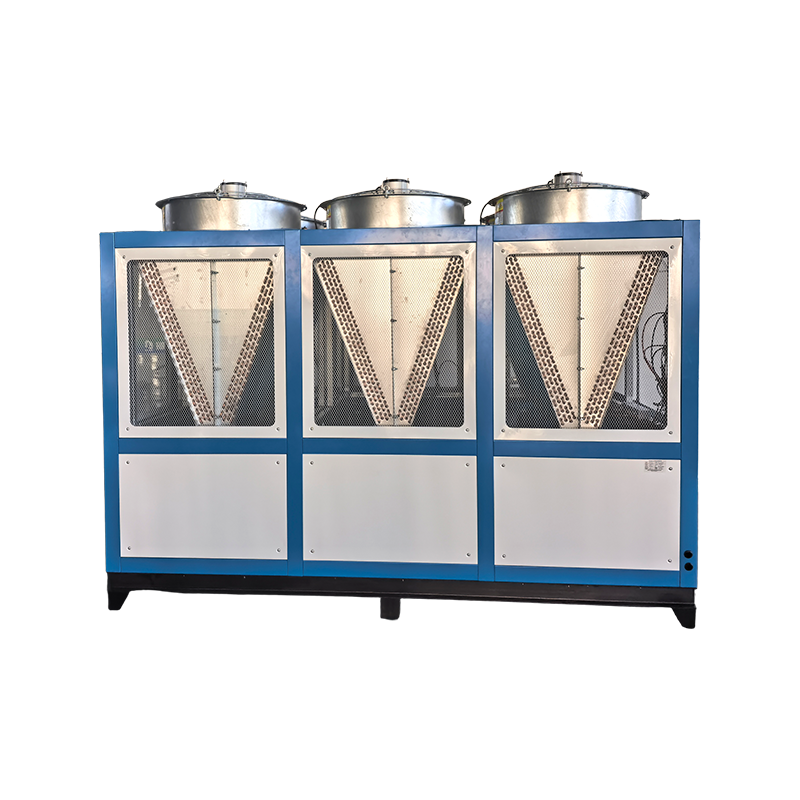
Higher-demand production facilities may require larger refrigeration circuits, multiple compressors, multiple fans, or coordinated chiller modules. Plant designers should consider maintenance isolation, piping balance, redundancy requirements, and the ability to maintain production when one component is unavailable.

An air cooled refrigeration unit should also be evaluated for noise, weather protection, refrigerant service requirements, and the possibility of heat discharge affecting adjacent work areas. A unit that fits physically may still be unsuitable if the surrounding space cannot provide its required ventilation.

7. Match the Chiller to Manufacturing Process Requirements

Different industrial processes impose different requirements on temperature stability, coolant quality, and response to sudden changes in load. The following examples illustrate common selection considerations rather than prescribing one configuration for every factory.

Plastic injection molding

Cooling circuits may serve molds, hydraulic equipment, and auxiliary machinery. Evaluate mold temperature requirements, cycle patterns, and the consequences of interruptions to cooling water flow.

Cycle consistency

Laser and CNC equipment

Laser sources, machine spindles, and associated components may require different coolant temperatures. Confirm temperature stability, flow monitoring, filtration, and the manufacturer's coolant quality requirements.

Thermal stability

Food and beverage processing

Process cooling may support production equipment, liquid handling, or auxiliary refrigeration loads. Assess hygiene boundaries, corrosion resistance, cleaning requirements, and whether an intermediate heat exchanger is appropriate.

Process hygiene

Chemical manufacturing

Reactor jackets, blending systems, and process vessels can experience variable heat loads. Evaluate temperature control range, fluid compatibility, materials, and the consequences of cooling interruption.

Load variability

Electronics and testing

Testing equipment and production fixtures may need repeatable temperatures to support consistent measurements. Review setpoint accuracy, temperature fluctuations, and the interaction between cooling and test schedules.

Repeatability

Packaging and assembly

Cooling may be needed for drives, heat-generating process equipment, or specialized manufacturing stations. Determine whether a shared loop or dedicated machine-level cooling is more practical.

Operational continuity

Where several processes need different temperatures, separate secondary loops or heat exchangers can provide better control. A common chiller can produce a central coolant supply while downstream circuits use appropriate mixing or heat exchange arrangements. This design must account for additional pumping energy, temperature approach, and control interactions.

8. Compare Key Selection Criteria Before Purchasing

Procurement teams should evaluate performance, installation, maintainability, and control capability together. The lowest purchase price does not necessarily represent the lowest cost over the equipment's operating life.

Illustrative Selection Priority Profile

A conceptual comparison of two procurement priorities on a relative five-point scale. These scores are examples for discussion, not independent product ratings.

Installation simplicity Peak-load capability Serviceability Control flexibility Space efficiency Priority APriority B
Define priorities with production, engineering, maintenance, and procurement teams before assigning project-specific scores.

Technical requirements to include in a request for quotation

  • Required net cooling capacity at specified ambient and coolant temperatures.
  • Coolant type, target supply temperature, return temperature, and required flow.
  • Operating ambient range and any site-specific exposure conditions.
  • Electrical supply, full-load current, starting characteristics, and control interfaces.
  • Noise requirements, installation dimensions, weight, lifting provisions, and service clearances.
  • Safety protection, alarms, flow monitoring, and automatic shutdown functions.
  • Documentation, recommended spare parts, maintenance intervals, and warranty conditions.

Ask the supplier to identify any assumptions behind its quoted capacity and operating data. If the factory operates at a low coolant temperature during hot weather, the unit must be checked at that combination of conditions rather than selected from a headline capacity rating alone.

9. Plan Installation, Ventilation, and Piping Carefully

Installation quality directly affects the reliability of an air cooled industrial chiller for factory use. Poor airflow, excessive pipe resistance, inadequate electrical protection, or difficult maintenance access can undermine the advantages of the selected equipment.

Condenser airflow and location

Position the equipment where the condenser can draw in sufficiently cool air and discharge heated air without recirculation. Walls, partitions, exhaust outlets, and neighboring machinery can interfere with ventilation. Rooftop or enclosed-space installations require particular attention to structural support, wind exposure, access, and heat accumulation.

Process piping and fluid management

Size the supply and return lines according to the required flow, fluid properties, acceptable pressure loss, and connection requirements. Provide appropriate isolation valves, drain points, air removal provisions, and service connections. Where the process is sensitive to contamination, use suitable filtration and maintain the coolant according to the equipment manufacturer's recommendations.

Electrical and control integration

Confirm supply voltage, frequency, available circuit capacity, grounding, and required electrical protection before installation. Control integration may include remote enable, common alarm, operating status, and temperature monitoring. Any connection to a plant supervisory system should be tested under both normal operation and fault conditions.

Commissioning checks

Before production release, verify the refrigerant circuit status, coolant concentration where applicable, flow rate, pump operation, sensor readings, alarms, and shutdown responses. Record initial supply and return temperatures, ambient conditions, and electrical readings. These records provide a reference for future maintenance and performance investigations.

From Requirement to Stable Operation
Assess process heat load Confirm temperatures and flow Check climate and installation limits Select capacity and controls Commission and verify performance Document the results before production handover

10. Estimate Lifecycle Costs Rather Than Purchase Price Alone

The total cost of a manufacturing plant chiller includes equipment acquisition, installation, electricity, scheduled maintenance, consumables, repairs, and the potential cost of interrupted production. A complete evaluation should cover the expected service period and the operating conditions under which the equipment will run.

Electricity deserves particular attention when the chiller operates for long shifts throughout the year. A small difference in actual operating efficiency can become significant when accumulated across thousands of operating hours. However, a more efficient unit at one test condition may not be the most efficient option at the factory's typical ambient temperature and load profile.

Illustrative Operating Cost Categories

Conceptual annual cost allocation for a hypothetical industrial cooling system. The proportions are illustrative only and should be replaced with local tariffs, supplier data, and maintenance estimates.

1007550250 85452515 EnergyMaintenanceRepairsOther
Illustrative relative units, not currency or percentages. Actual cost distribution varies by electricity price, usage, equipment age, and production conditions.

For a meaningful comparison, request estimates for annual electricity consumption at representative operating conditions, scheduled maintenance costs, expected consumables, and recommended replacement components. Include the cost of pumps and auxiliary equipment rather than evaluating the refrigeration package in isolation.

Production risk should also be considered. A facility with a high cost of downtime may justify additional capacity staging, alarm integration, critical spare parts, or a backup cooling arrangement. These measures increase initial investment but may reduce the consequences of an unexpected interruption.

11. Maintenance Practices That Protect Cooling Reliability

A dependable maintenance program helps preserve heat transfer, detect developing faults, and reduce unplanned production interruptions. The maintenance frequency should follow the equipment manual, operating environment, and actual service history rather than a universal calendar alone.

01

Routine operating checks

Review supply and return temperatures, alarms, unusual vibration, fan noise, visible leakage, and any unexpected change in operating behavior.

02

Condenser and airflow inspection

Check coil cleanliness, fan condition, air intake obstructions, and hot-air recirculation. Clean components using approved methods that do not damage fins or electrical parts.

03

Fluid and circulation checks

Inspect filters, pumps, valves, piping, and coolant condition. Check for air ingress, corrosion, sediment, or fluid concentration changes where applicable.

04

Scheduled technical service

Arrange qualified inspections of electrical protection, compressor operation, refrigerant-circuit condition, safety devices, and controls according to service requirements.

05

Performance trend review

Compare current operating records with commissioning baselines to identify changes in cooling capacity, runtime, electricity use, or temperature stability.
Maintenance staff should document findings, corrective actions, and component replacements. Refrigerant handling and work on energized electrical equipment must be performed by appropriately qualified personnel using required safety procedures.

12. Common Selection Mistakes and How to Avoid Them

Choosing by nominal capacity only

A rating without the relevant ambient and coolant conditions may not represent actual performance. Require documented capacity at the intended design point.

Ignoring peak outdoor temperatures

High ambient temperatures can reduce available cooling capacity and increase power demand. Review local weather conditions and the installation's actual air intake temperature.

Undersizing process piping

Excessive pressure loss can restrict flow and increase pumping requirements. Check the complete circuit, including valves, filters, and heat exchangers.

Overlooking ventilation clearance

Restricted airflow and hot-air recirculation can undermine condenser performance. Follow the installation requirements and inspect the surrounding environment.

Using one temperature for every process

Different machines may need different supply temperatures or coolant conditions. Assess whether separate circuits or intermediate heat exchangers are necessary.

Leaving future production out of the plan

New machinery and longer operating shifts can increase cooling demand. Define the expansion scenario and decide whether modular capacity is appropriate.

Each of these mistakes can be reduced through a documented design brief shared by production engineering, facilities management, maintenance, and procurement. The brief should define process requirements, installation constraints, acceptance criteria, and responsibilities before equipment specifications are finalized.

13. Working With an Air-Cooled Industrial Chiller Manufacturer

An air cooled industrial chiller manufacturer should be able to explain how the proposed equipment meets the factory's operating requirements. Procurement teams benefit from technical discussions that focus on verifiable data, application compatibility, and long-term serviceability rather than general performance claims.

Before confirming a specification, provide the supplier with the process heat-load assessment, required coolant conditions, site ambient range, expected daily operating schedule, electrical information, and available installation space. Where the process is sensitive to temperature fluctuations, also explain the required control behavior and acceptable operating limits.

Ask the manufacturer or air cooled industrial chiller supplier to clarify:

  • Available cooling capacity at the actual design conditions.
  • Permitted coolant temperatures, flow rates, and fluid compatibility.
  • Compressor and fan control arrangements under changing loads.
  • Operating limits, protection functions, alarms, and restart behavior.
  • Required maintenance access and recommended service intervals.
  • Delivery scope, commissioning responsibilities, documentation, and after-sales support.

A custom air cooled industrial chiller may be considered when standard equipment cannot meet a specific temperature range, space constraint, fluid requirement, control interface, or environmental condition. Customization should address a documented technical need. Changes to the enclosure, piping, or control system should not compromise airflow, safety protection, maintainability, or verified refrigeration performance.

For projects with unusual loads or strict production tolerances, request a technical review before ordering. The review should identify unresolved assumptions, confirm the intended duty point, and establish how performance will be verified during commissioning.

14. Frequently Asked Questions

Q1: What is an air cooled industrial chiller?

An air cooled industrial chiller is a refrigeration system that removes heat from a circulating process liquid and rejects that heat to ambient air through a condenser. It is used to cool industrial machinery, production processes, and temperature-controlled equipment without requiring a dedicated cooling tower.

Q2: Is an air cooled water chiller suitable for continuous factory operation?

Yes, provided the unit is designed for the required duty, ambient conditions, coolant temperatures, and operating schedule. Continuous applications should also consider maintenance access, fault alarms, component reliability, and the consequences of an unexpected cooling interruption.

Q3: How do I calculate the cooling capacity needed for my factory?

Start by identifying the heat entering the coolant circuit during representative production and peak-load conditions. Confirm supply and return temperatures, required flow, operating hours, and expected future demand. Have a qualified engineer review uncertainty and simultaneous loads before finalizing the capacity.

Q4: Can an air cooled industrial chiller operate in a hot climate?

It can operate in a hot climate when the selected model is rated for the site's ambient conditions. Higher outdoor temperatures can reduce available capacity and increase power consumption, so performance data at the expected design temperature is essential.

Q5: What is the difference between an air cooled cabinet chiller and a portable chiller?

A cabinet chiller describes an enclosed equipment configuration, while a portable chiller emphasizes mobility. A cabinet unit may be installed as a dedicated machine-side system, whereas a portable unit may be moved between suitable applications. Both must meet the process duty and installation requirements.

Q6: Does an air cooled chiller eliminate water consumption?

It eliminates the need for a dedicated cooling tower and condenser-water circuit in a typical air cooled arrangement. The process loop may still use water or a water-glycol mixture, and fluid losses, flushing, or maintenance requirements depend on the system design.

Q7: How often should an industrial air cooled chiller be maintained?

Maintenance intervals depend on the equipment manufacturer's instructions, operating hours, dust exposure, ambient conditions, and process-fluid quality. Routine checks should be supplemented by scheduled technical servicing and performance trend reviews.

Q8: Is a compact industrial chiller always more economical?

No. A compact design may reduce space requirements, but it does not automatically provide lower energy consumption or lifecycle cost. Compare rated performance, service access, operating limits, installation expense, and maintenance requirements for the complete application.

Q9: What information should I send to an industrial chiller supplier?

Provide the required cooling capacity, supply and return temperatures, coolant type, flow rate, ambient conditions, electrical supply, operating schedule, installation dimensions, and control requirements. Include process diagrams and future expansion plans when available.

Q10: When should I consider a custom air cooled industrial chiller?

Consider a custom configuration when standard equipment cannot satisfy the required operating temperature, cooling duty, footprint, coolant compatibility, control integration, or environmental constraints. Confirm the technical justification and the expected impact on cost, delivery, servicing, and performance validation.