
 English
  Français
  Español
  Português
  عربى
عربى  Türk
Türk  हिंदी
हिंदी 


















Selection Guide and Factory Deployment Key Points for Air-Cooled Industrial Chillers
Factories operating in regions with limited water supplies, poor water quality, or challenging outdoor conditions need a cooling system that balances thermal performance, installation flexibility, and operational reliability. Air-cooled industrial chillers remove heat through ambient air rather than relying on a cooling tower, reducing water consumption and simplifying system deployment. However, selecting suitable equipment requires more than matching nominal cooling capacity to process demand. Engineers must also evaluate ambient temperature, heat exchanger performance, fan configuration, ventilation clearance, operating temperature, and maintenance accessibility.
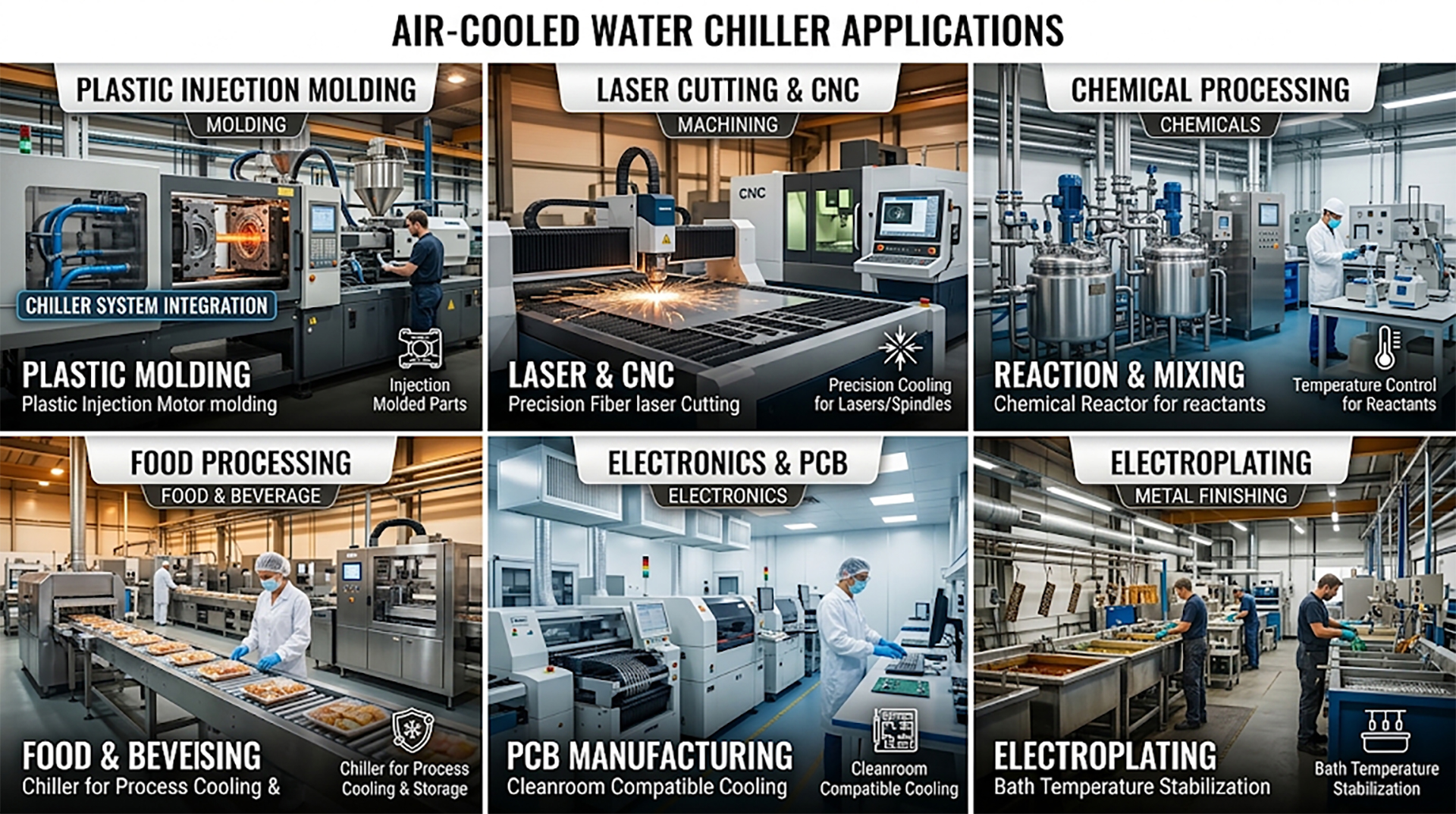
A properly selected air cooled industrial chiller can support continuous manufacturing processes while reducing installation complexity. For applications such as plastic molding, powder coating, laser processing, chemical production, and pharmaceutical manufacturing, the cooling system must maintain stable water temperatures under changing production loads. The following guide explains the main equipment categories, selection criteria, and deployment practices for industrial facilities.
1. Compact Cabinet Chillers for Space-Constrained Factories
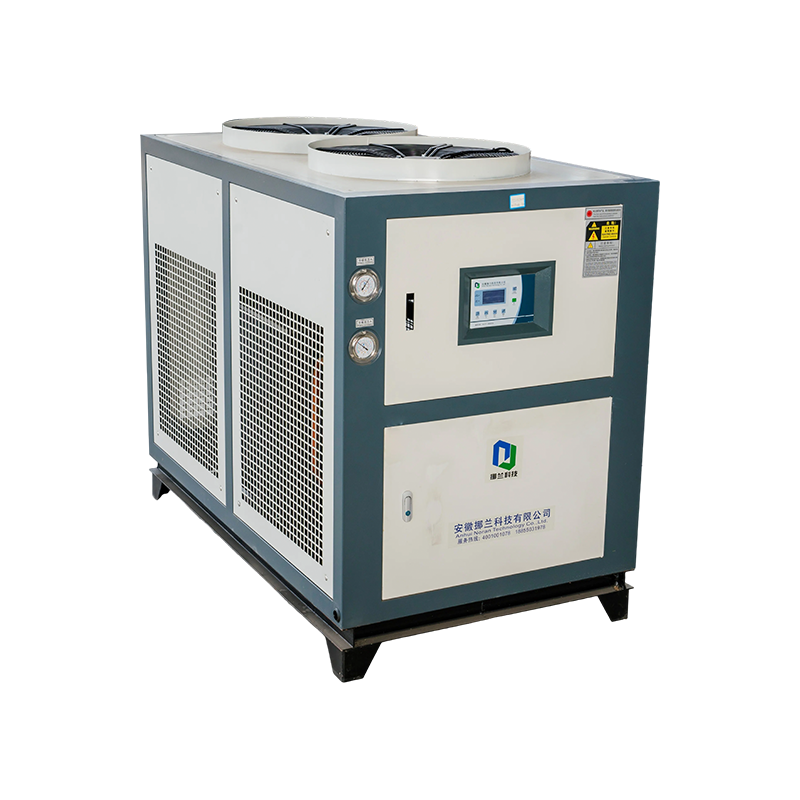
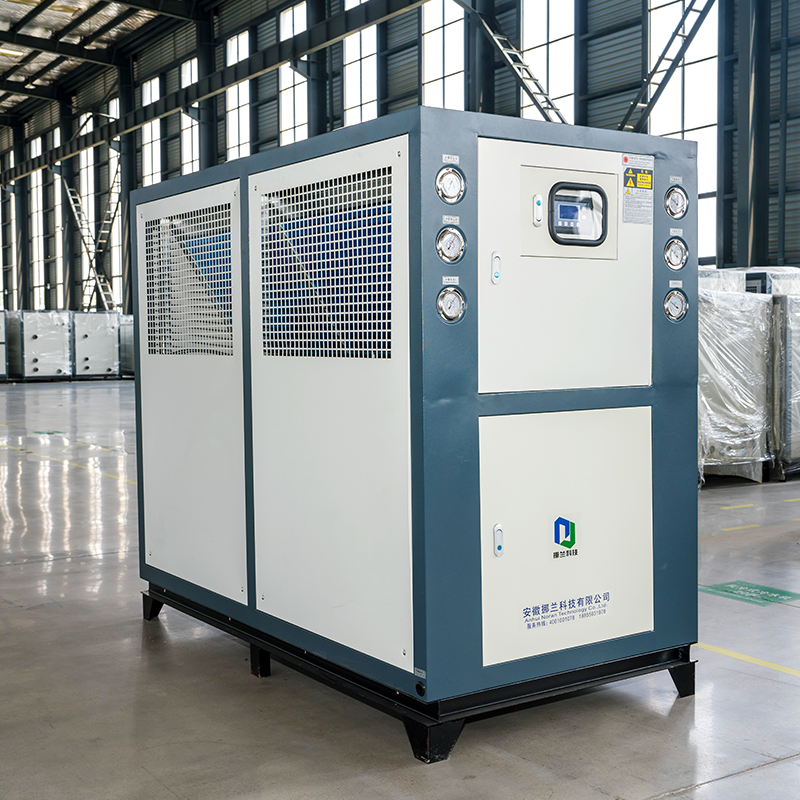
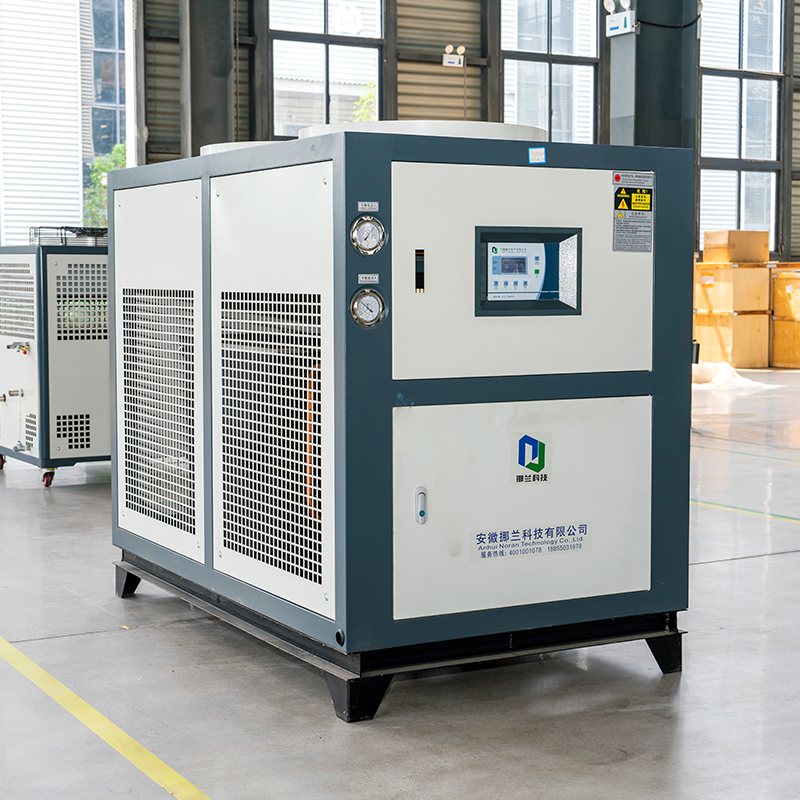
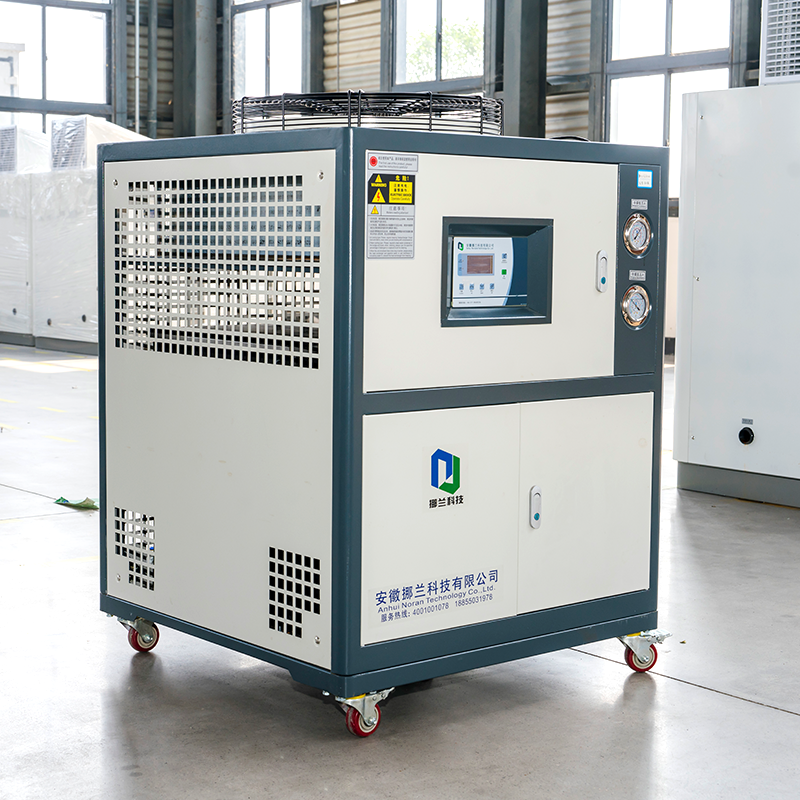
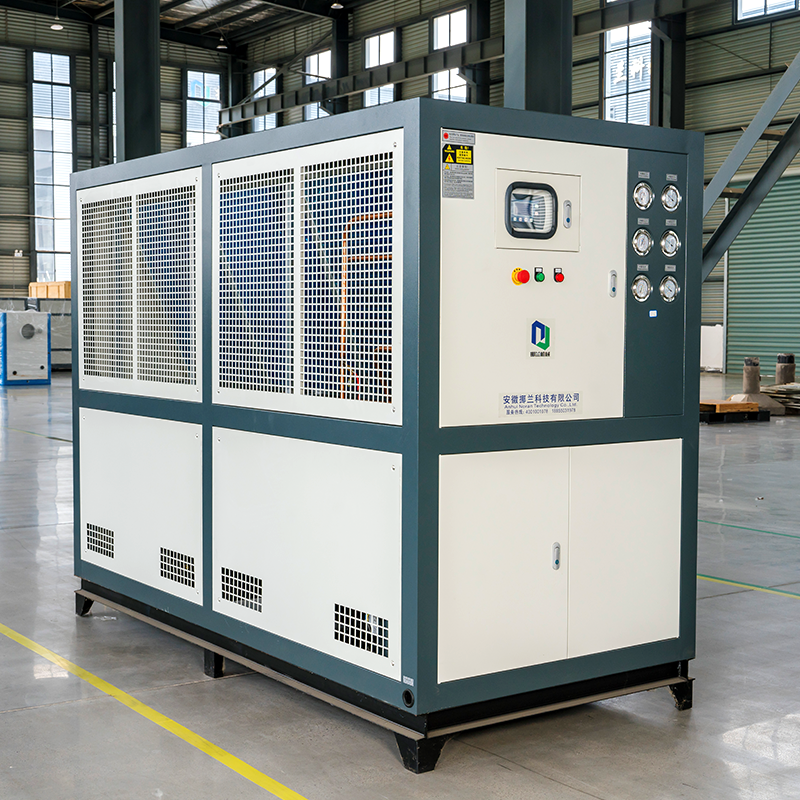
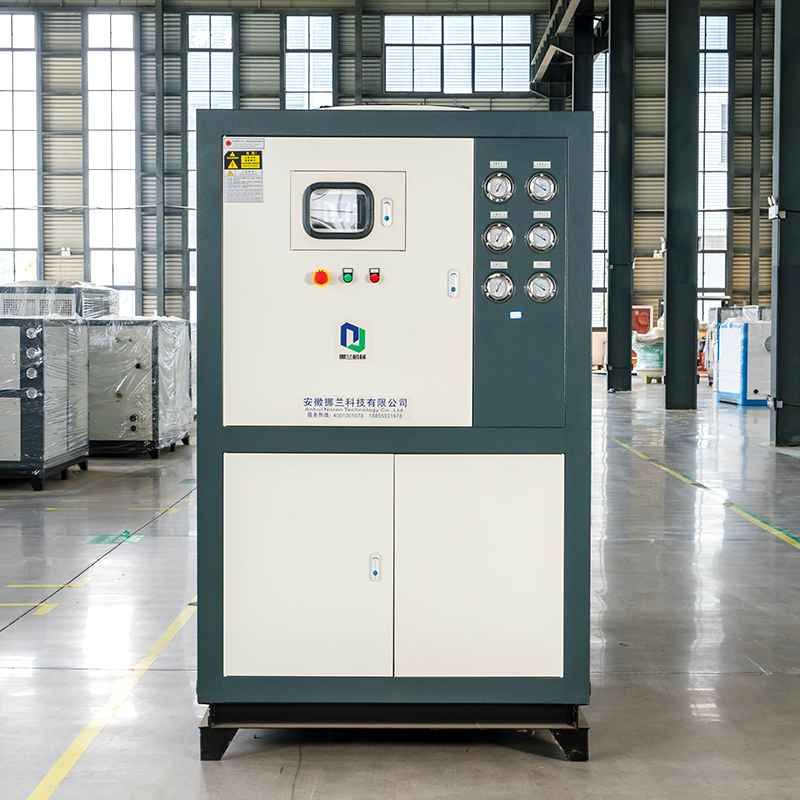
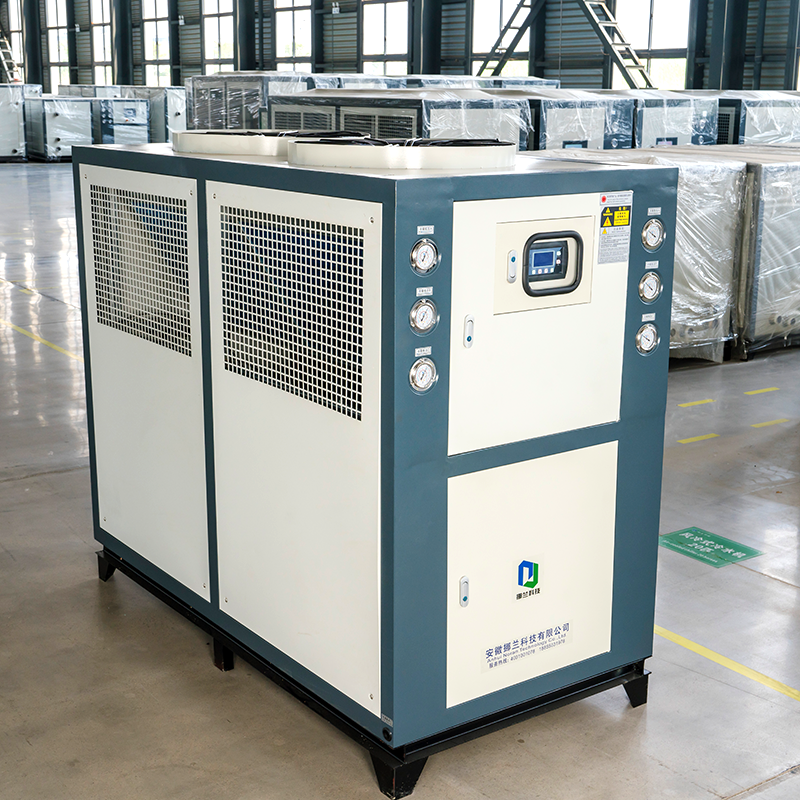
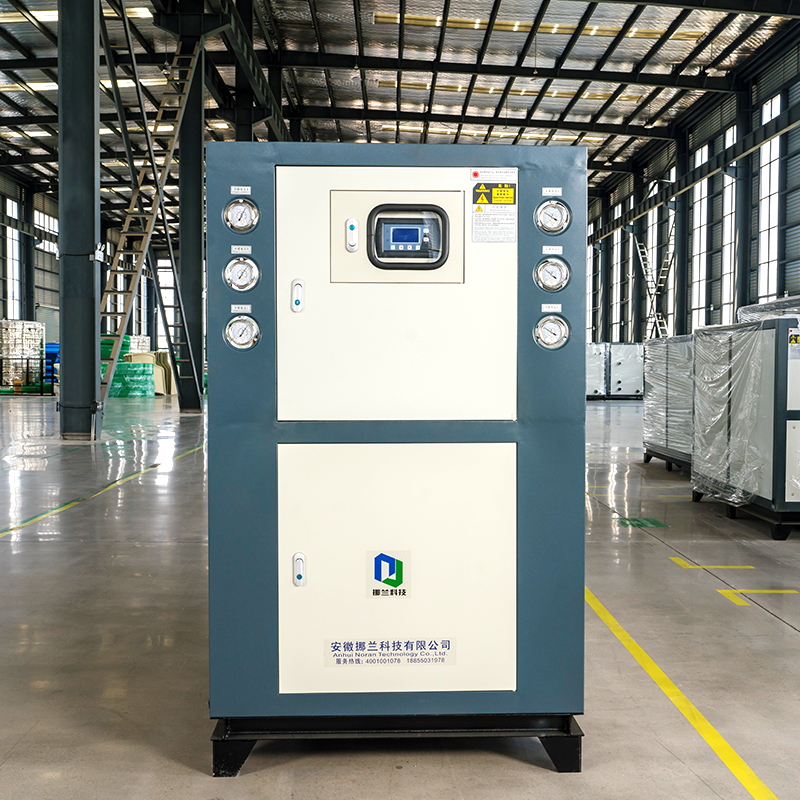
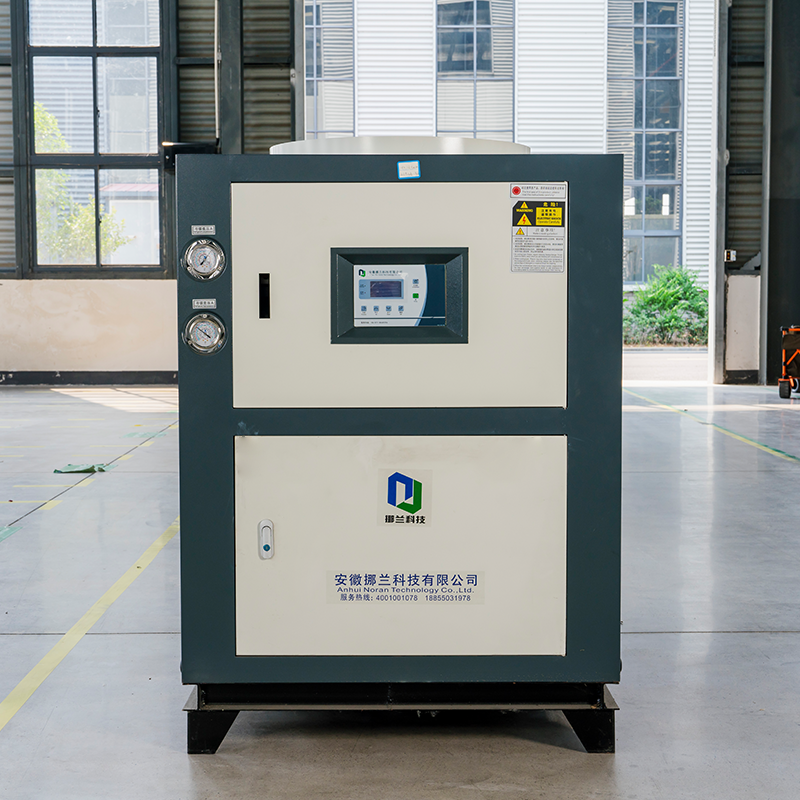
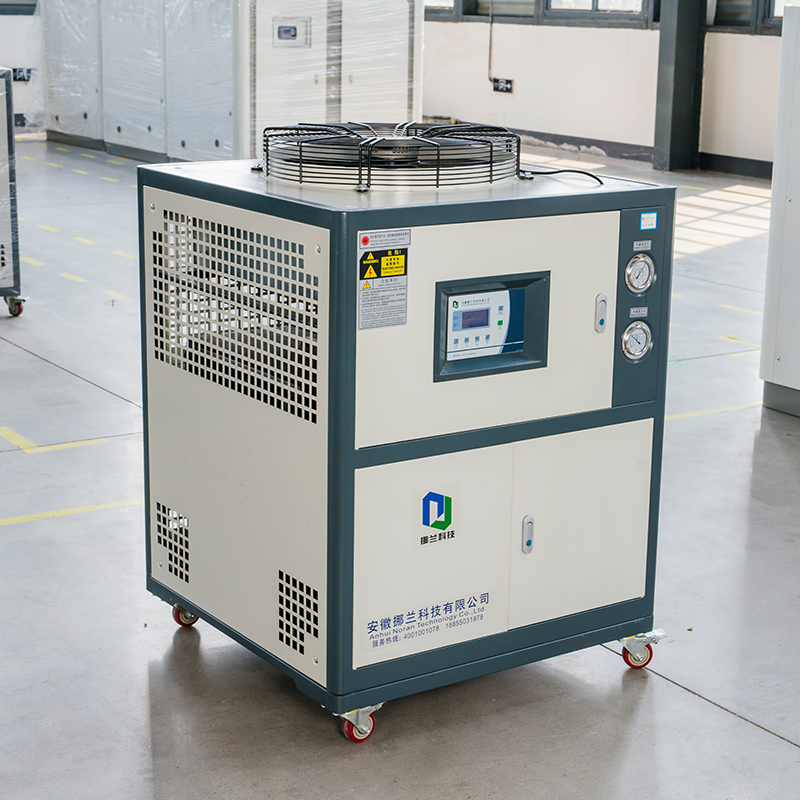
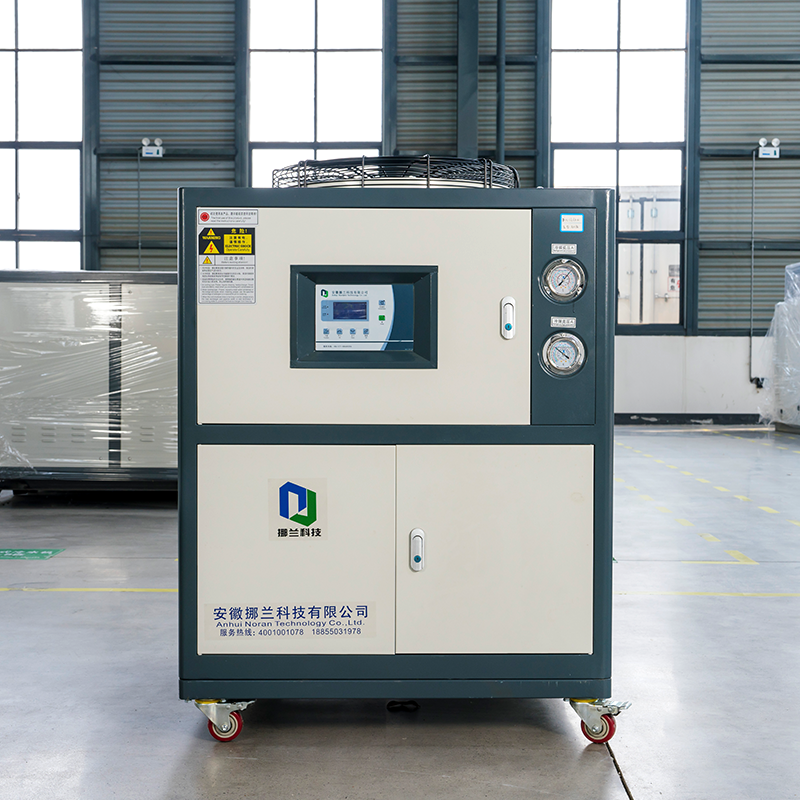
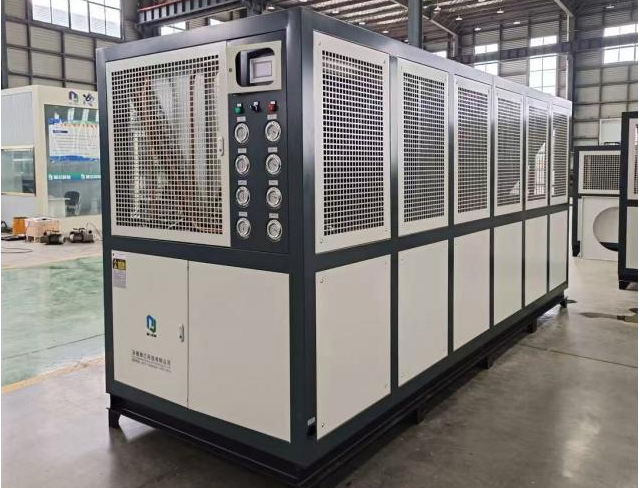
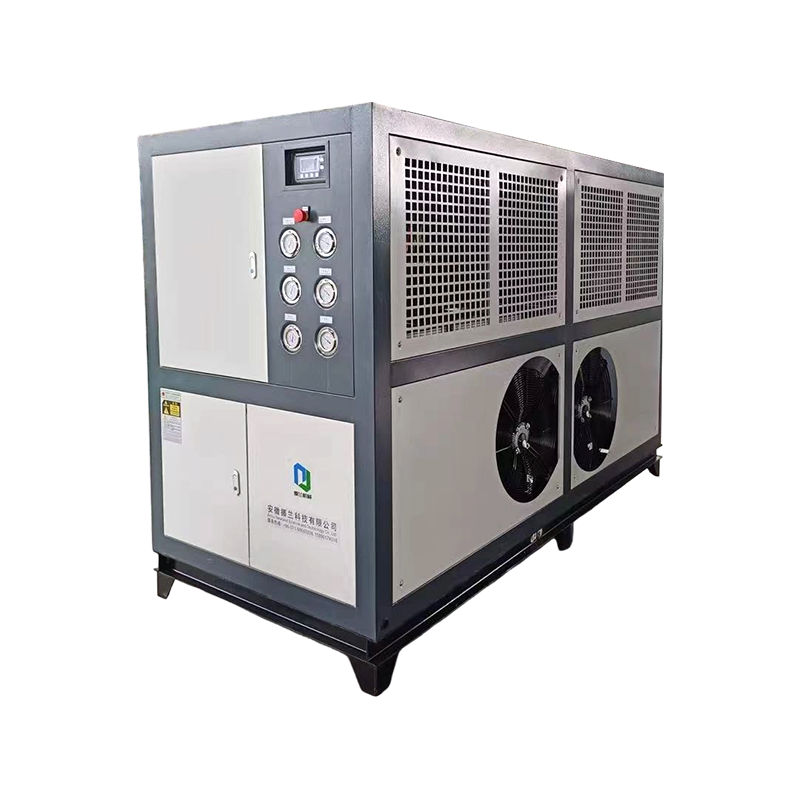
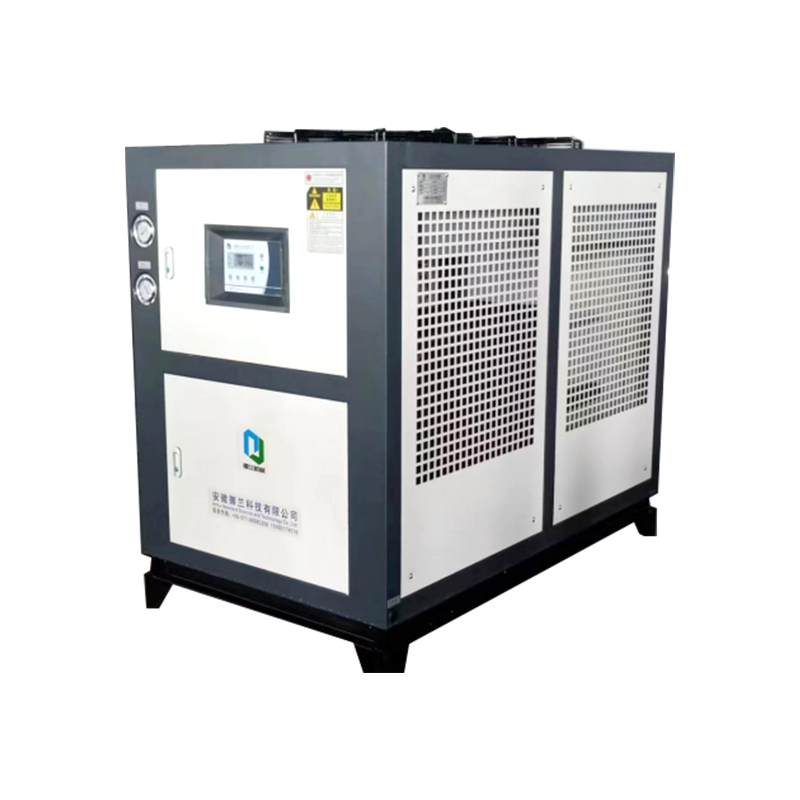
A cabinet chiller integrates refrigeration components, heat exchange equipment, fans, and control devices into a compact enclosure. This configuration is suitable for production areas where floor space is limited and a separate cooling tower would create additional installation requirements. A cabinet type industrial chiller typically supplies chilled water to individual machines or small groups of process equipment, providing a centralized control point for local cooling demands.
When evaluating this category, purchasers should examine cooling capacity, compressor configuration, enclosure ventilation, water connections, and access to electrical components. Nominal capacity must be assessed against the actual heat load and expected ambient temperature. A compact industrial chiller installed near an injection molding machine, laser cutter, or small process line can shorten chilled-water piping and simplify maintenance, provided that the surrounding area allows sufficient airflow.
Noran's cabinet chillers offer cooling capacities from 2.75 kW to 137.6 kW, with model-dependent configurations for different industrial requirements. The product range is designed for applications where water availability, installation space, and maintenance convenience are important considerations. Buyers can review the air cooled cabinet chiller range to evaluate its suitability for specific equipment and production layouts.
2. Air-Cooled Industrial Water Chillers for Continuous Process Cooling
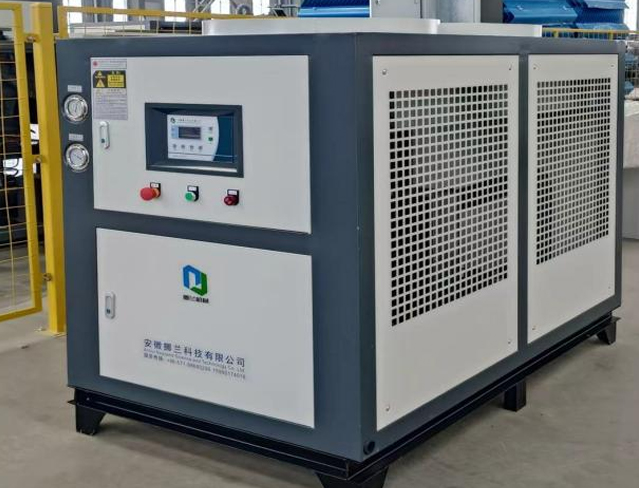
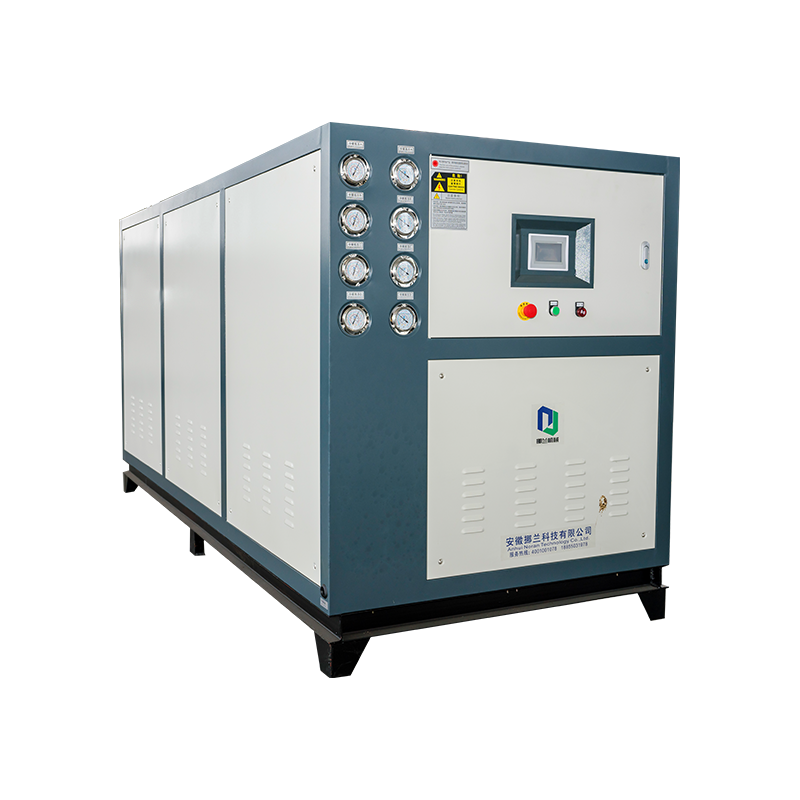
Industrial water chillers are intended for processes that require a consistent supply of chilled water over extended operating periods. Their refrigeration circuits transfer heat from circulating process water to the surrounding air through a refrigerant system and an air-side heat exchanger. Compared with water-cooled installations, this arrangement avoids the need for cooling tower water circulation and associated tower treatment requirements.
An air cooled industrial water chiller should be selected according to the process heat load, required supply-water temperature, return-water conditions, operating schedule, and permissible temperature variation. For plastic molding, the unit helps control mold temperature and supports product consistency. In powder coating and paint manufacturing, stable cooling water can help manage the temperature of grinding and dispersion equipment. Laser processing and CNC machining may require dedicated cooling circuits to protect sensitive equipment and maintain machining accuracy.
The refrigeration system must also accommodate variations in production demand. Scroll compressors, when fitted to the selected model, provide a practical configuration for many small and medium-capacity applications. The condenser and fan assembly must reject heat effectively at the site's expected ambient temperature. A unit that performs adequately under moderate conditions may lose available cooling capacity in a hot outdoor environment, so selection should be based on performance data at the actual design conditions.
For factories requiring dependable process water, Noran develops refrigeration equipment around cooling capacity, temperature requirements, and installation constraints. Its air cooled industrial water chiller options can be assessed for manufacturing processes that need stable thermal conditions without a cooling tower.
3. High-Ambient and Outdoor Cooling Configurations
Outdoor installations and factories in hot climates require special attention to condenser performance, airflow, electrical protection, and service access. An air-cooled refrigeration unit releases heat directly into the surrounding environment. When outdoor air temperatures rise, the temperature difference available for heat rejection becomes smaller, potentially increasing condensing pressure and reducing refrigeration efficiency. Dust accumulation, direct solar exposure, and recirculation of hot discharge air can further impair performance.
A custom air cooled industrial chiller may be appropriate when standard equipment cannot adequately address unusual ambient conditions, low-temperature requirements, restricted installation spaces, or specialized process loads. Engineering adjustments may involve fan arrangements, condenser selection, protective enclosures, control settings, and refrigerant circuit configuration, subject to the manufacturer's available designs and validated operating limits.
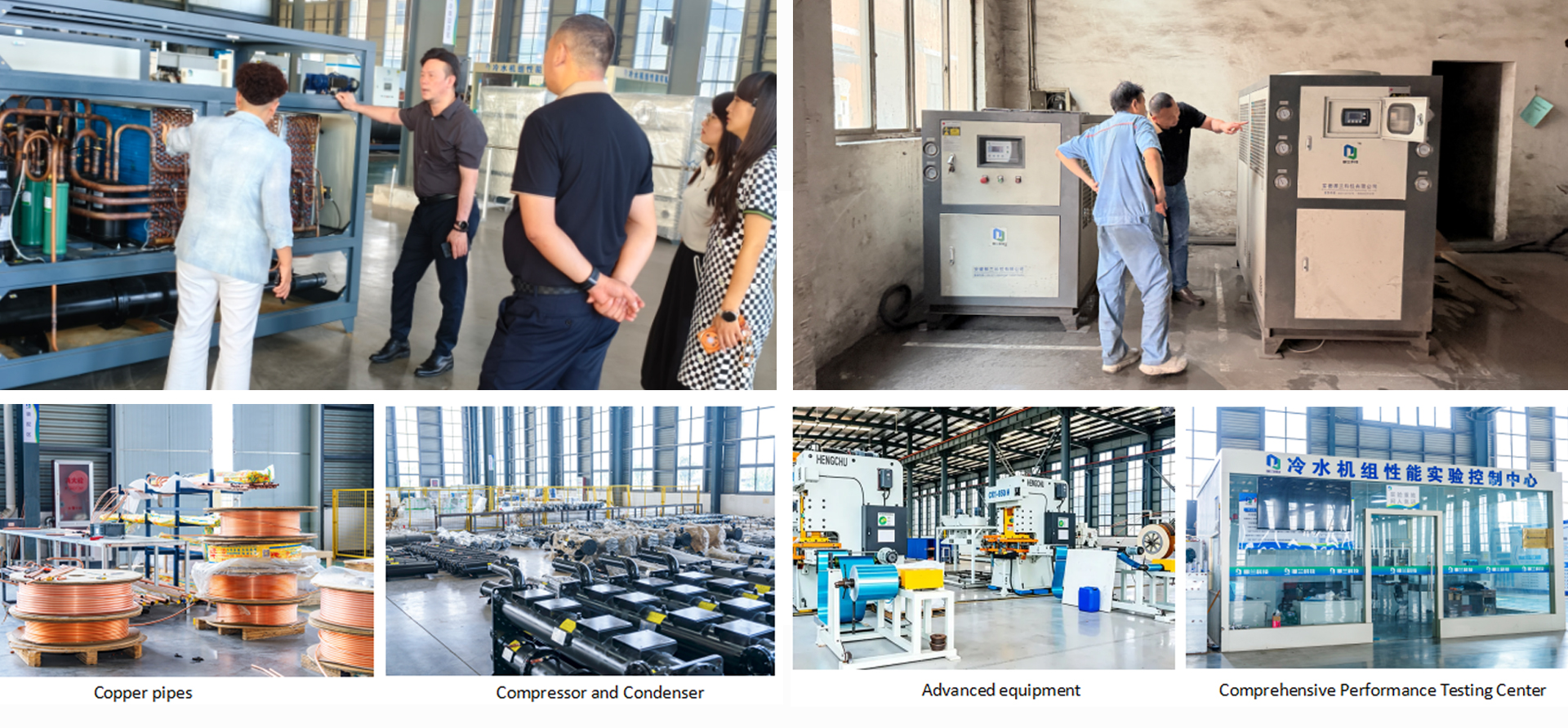
Noran provides customized refrigeration solutions for industrial customers whose operating environments differ from standard installation conditions. Founded in 2014, the company has developed capabilities in industrial refrigeration and temperature control. In 2021, its operations moved to Anhui, where the company established a production base of approximately 33,000 square meters in Mingguang City. This manufacturing and engineering foundation supports product development, quality control, and project delivery for different industrial applications.
For outdoor deployment, engineers should confirm the permitted ambient operating range, weather protection, electrical cabinet rating, and service clearances before installation. In dusty or corrosive environments, condenser cleaning intervals and material suitability should be included in the maintenance plan. These measures help preserve heat rejection performance and reduce avoidable interruptions.
4. Comparison of Main Air-Cooled Chiller Categories
The appropriate category depends on whether the priority is compact installation, continuous process cooling, or adaptation to difficult environmental conditions. The following comparison provides a preliminary selection framework. Final capacity, temperature range, and configuration must be confirmed against the technical documentation for the selected model.
| Equipment category | Main function | Typical applications | Key selection factor |
| Cabinet-type chiller | Localized chilled-water supply | Laser equipment, individual molding machines | Footprint and maintenance access |
| Process water chiller | Continuous temperature control | Plastic processing, chemical production, powder coating | Heat load and water temperature stability |
| High-ambient configuration | Heat rejection under demanding environmental conditions | Hot-climate factories and outdoor equipment areas | Ambient rating and condenser airflow |
| Customized chiller system | Adaptation to specific process requirements | Specialized manufacturing and low-temperature processes | Validated operating range and system integration |
5. Heat Dissipation Performance and Fan Configuration
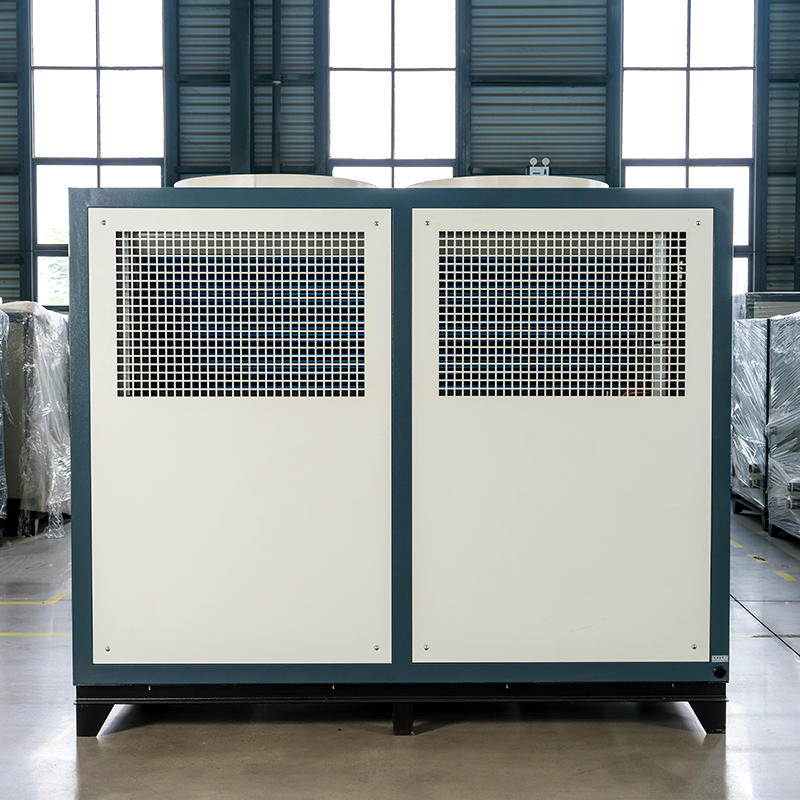
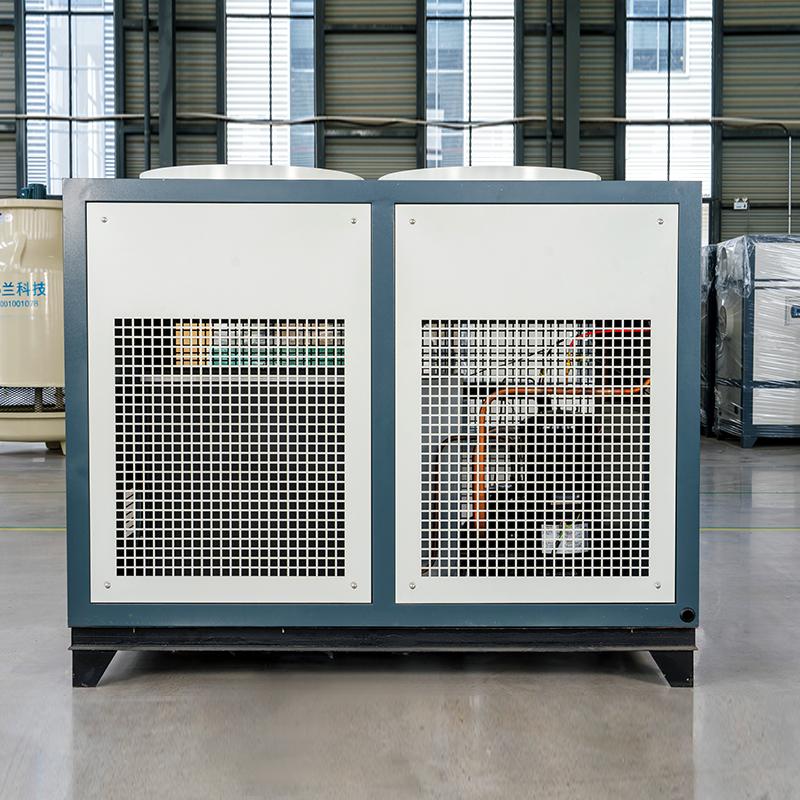
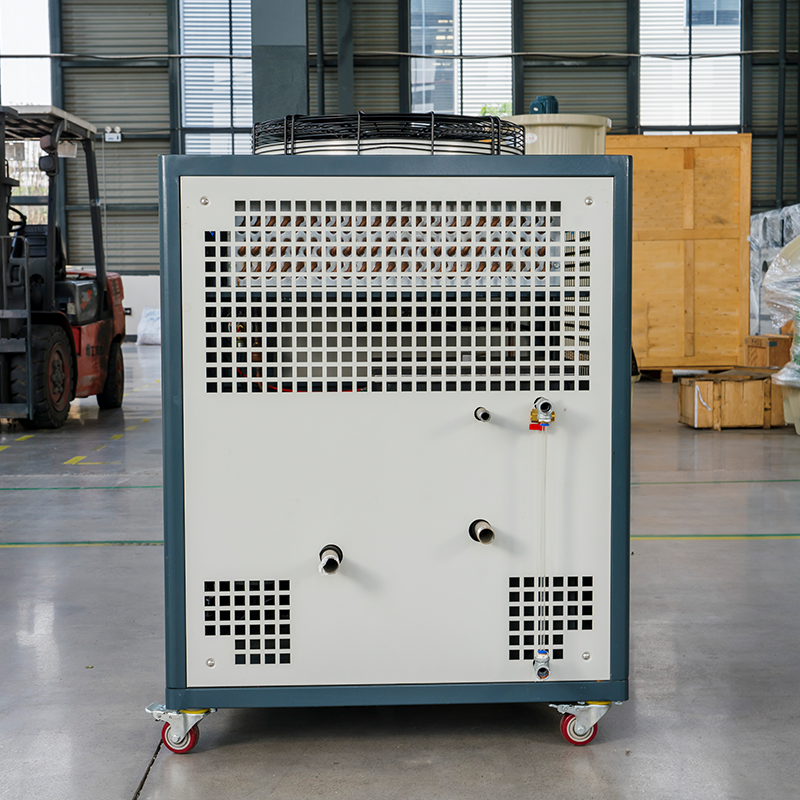
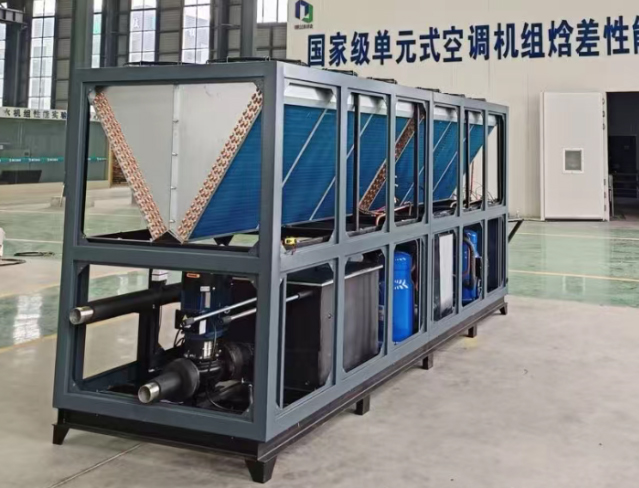
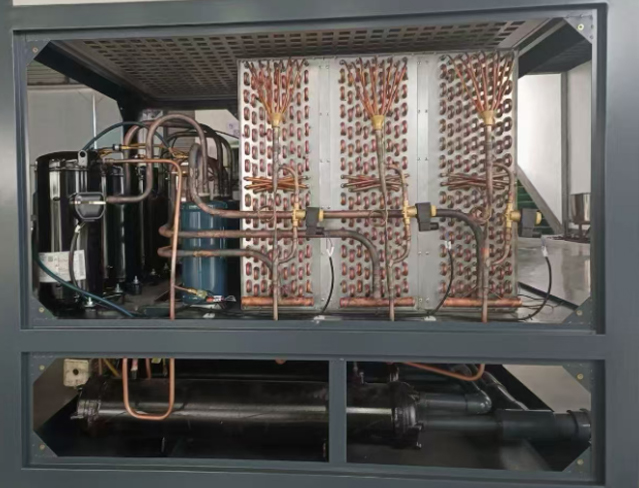
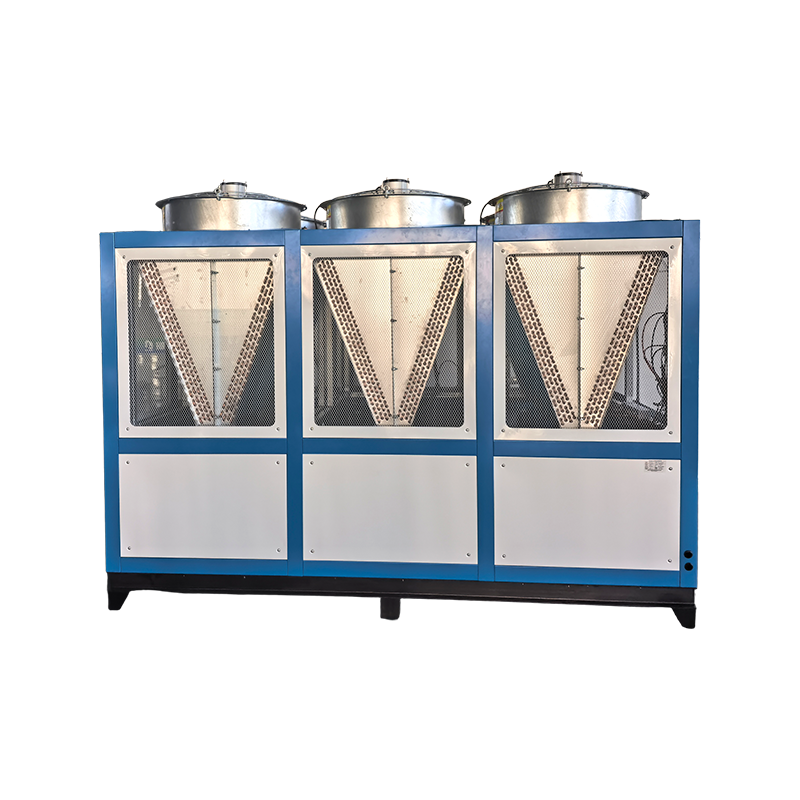
The condenser is a critical component because it transfers refrigeration-system heat into ambient air. Its performance depends on heat exchanger surface area, fin cleanliness, air velocity, fan capacity, and the temperature of incoming air. A compact air cooled chiller for industrial applications must balance the available installation space with the airflow needed to reject heat reliably.
Axial fans are commonly used where large volumes of air must pass through condenser coils with relatively low air-side resistance. Multiple fans can distribute airflow across a larger heat exchanger and may allow staged operation when supported by the control system. The actual arrangement depends on the unit's capacity, condenser design, and manufacturer specifications. Fan quantity alone is not a reliable indicator of cooling performance.
During equipment selection, engineers should review:
- Rated cooling capacity at the expected outdoor temperature.
- Condenser airflow direction and the risk of hot-air recirculation.
- Fan control methods, operating noise, and power consumption.
- Coil accessibility for cleaning and inspection.
- Protection against high pressure, low pressure, freezing, and phase-sequence faults where applicable.
Variable-speed fan control or staged fan operation can help adapt heat rejection to changing conditions when included in the selected configuration. However, these features should be verified rather than assumed. Routine cleaning is equally important because blocked fins increase airflow resistance and can reduce cooling efficiency.
6. Factory Deployment and Installation Planning
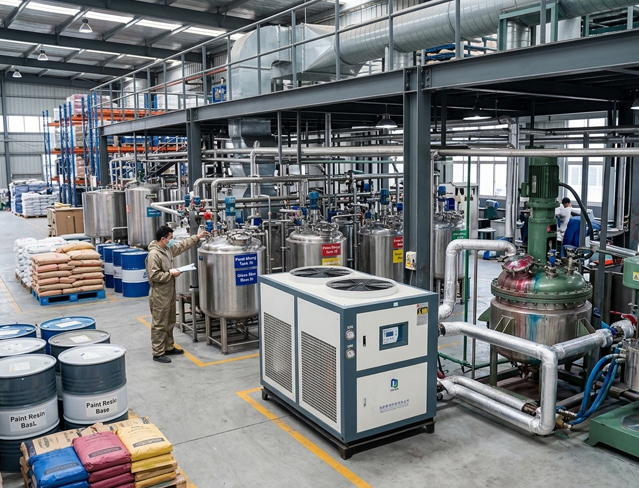
Successful deployment starts with a clear understanding of the process and its operating environment. An air cooled chiller for process cooling should be positioned where ambient air can enter freely and hot discharge air can escape without returning to the condenser inlet. Indoor installation requires suitable ventilation or heat management, while outdoor installation requires appropriate protection against rain, dust, sunlight, and other site-specific hazards.
Before commissioning, the project team should verify the chilled-water circuit, piping insulation, pump selection, electrical supply, drainage arrangements, and control interfaces. The system should be flushed and checked for leaks before normal operation. Operators should also understand alarm indications and the procedures for inspecting filters, condenser coils, fans, and water levels where relevant.
A practical deployment sequence is outlined below:
- Define process requirements. Document heat load, target water temperature, operating hours, and anticipated load fluctuations.
- Assess the site. Check ambient temperature, water availability, air circulation, available floor space, and service access.
- Confirm equipment suitability. Compare model-specific capacity, operating limits, compressor design, fan configuration, and protection functions.
- Install and commission. Complete mechanical and electrical checks, test the water circuit, and verify operating performance under representative conditions.
- Establish preventive maintenance. Set inspection intervals for condenser cleanliness, refrigerant-system alarms, water quality, and electrical components.
Noran supplies industrial refrigeration equipment for plastics, powder coating, electronics, pharmaceuticals, chemicals, and other manufacturing sectors. Its engineering approach considers process conditions and installation limitations when configuring cooling systems. For buyers comparing an air cooled water chiller for manufacturing, it is important to request model-specific performance information and installation requirements rather than relying solely on nominal capacity.
7. Manufacturer Evaluation and Long-Term Operating Reliability
Choosing an air cooled industrial chiller manufacturer requires an assessment of manufacturing quality, technical documentation, testing procedures, customization capabilities, and after-sales support. A qualified supplier should clarify the available operating range, expected site conditions, maintenance requirements, and limitations of the proposed equipment. Export experience and access to spare parts are also relevant when the factory is located far from the manufacturing base.
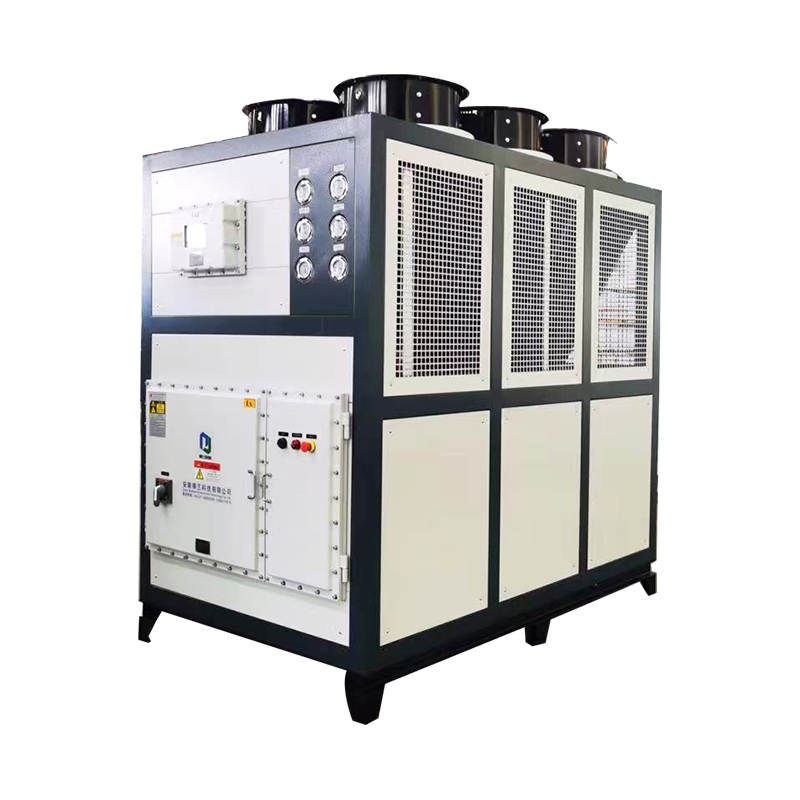
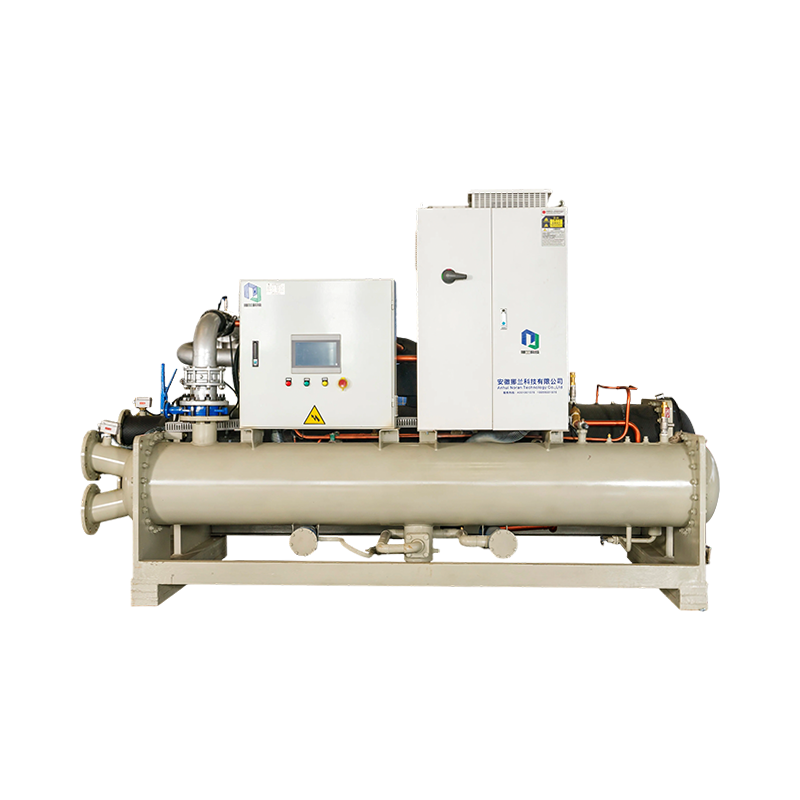
An experienced air cooled industrial chiller supplier should help customers match equipment configuration to the real process load. Noran offers refrigeration equipment and customized temperature control solutions, supported by manufacturing, quality control, and engineering capabilities. Its product portfolio includes industrial chillers, air-cooling systems, screw chillers, low-temperature refrigeration units, heat recovery systems, and explosion-proof refrigeration equipment. ISO and CE certification documentation is available for applicable products and export requirements, subject to confirmation for the selected model.
When a factory needs an air cooled industrial chiller for factory deployment, buyers should request written confirmation of cooling capacity under design ambient conditions, water temperature limits, electrical requirements, and the proposed fan and condenser arrangement. Noran can assess these requirements for a suitable configuration, including the cabinet chiller series. Clear technical alignment before ordering helps reduce installation risks and supports dependable long-term operation.
Frequently Asked Questions
Q1: Why choose an air-cooled chiller when water supplies are limited?
Air-cooled chillers reject heat directly to the surrounding air and do not require a cooling tower. This reduces dependence on cooling tower water and associated water treatment, making them suitable for facilities with limited water availability or poor water quality.
Q2: How does a cabinet chiller differ from a larger process chiller?
A cabinet chiller emphasizes integrated construction and compact installation, often serving individual machines or localized loads. Larger process cooling systems may be configured for multiple machines or more demanding continuous loads. The appropriate option depends on the required capacity, piping arrangement, and operating conditions.
Q3: Can an air-cooled industrial chiller operate outdoors in hot climates?
Yes, if the selected model is rated for the site's ambient conditions and installed with sufficient ventilation and appropriate environmental protection. High outdoor temperatures can reduce available cooling capacity, so model-specific performance data and condenser airflow requirements should be confirmed before purchase.
Q4: What information should buyers provide when requesting a customized chiller?
Provide the process heat load, required chilled-water temperature, water flow requirements, operating schedule, ambient temperature range, installation location, power supply, and any special environmental constraints. These details help the manufacturer assess equipment capacity and configuration.
Q5: What maintenance is important for long-term cooling performance?
Regularly inspect and clean condenser coils, check fans and electrical connections, monitor system alarms, and maintain the chilled-water circuit according to the manufacturer's instructions. Appropriate preventive maintenance helps preserve heat transfer performance, identify developing faults, and reduce unplanned downtime.


