
 English
  Français
  Español
  Português
  عربى
عربى  Türk
Türk  हिंदी
हिंदी 


















Working Principles and Industrial Applications of Air-Cooled Screw Chillers
Industrial refrigeration systems play an important role in maintaining process stability, protecting production equipment, and controlling operating costs. Among the available cooling technologies, air-cooled screw chillers are widely used in facilities that require continuous chilled water supply without installing a cooling tower. Their integrated condenser design, screw compressor technology, and automated control systems make them suitable for medium and large industrial applications.
An air cooled screw chiller combines mechanical refrigeration with an air-cooled heat rejection system. Instead of relying on cooling tower water, it transfers heat directly to the outdoor air through condenser coils and fans. This configuration reduces auxiliary equipment requirements and provides greater flexibility for factories, workshops, and commercial facilities where water resources or installation space may be limited.
1. Structural Composition and Refrigeration Cycle
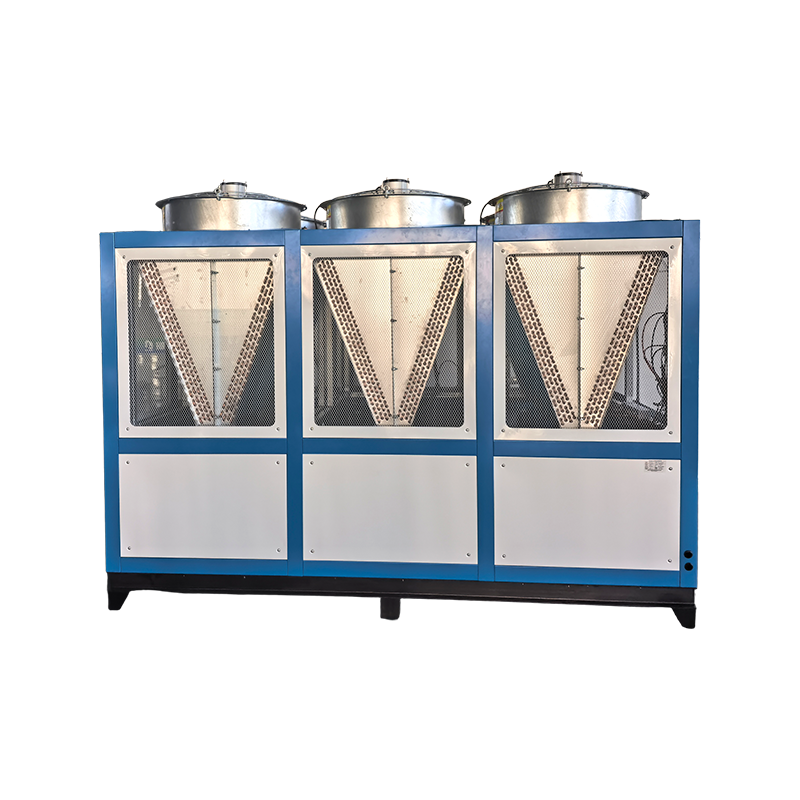
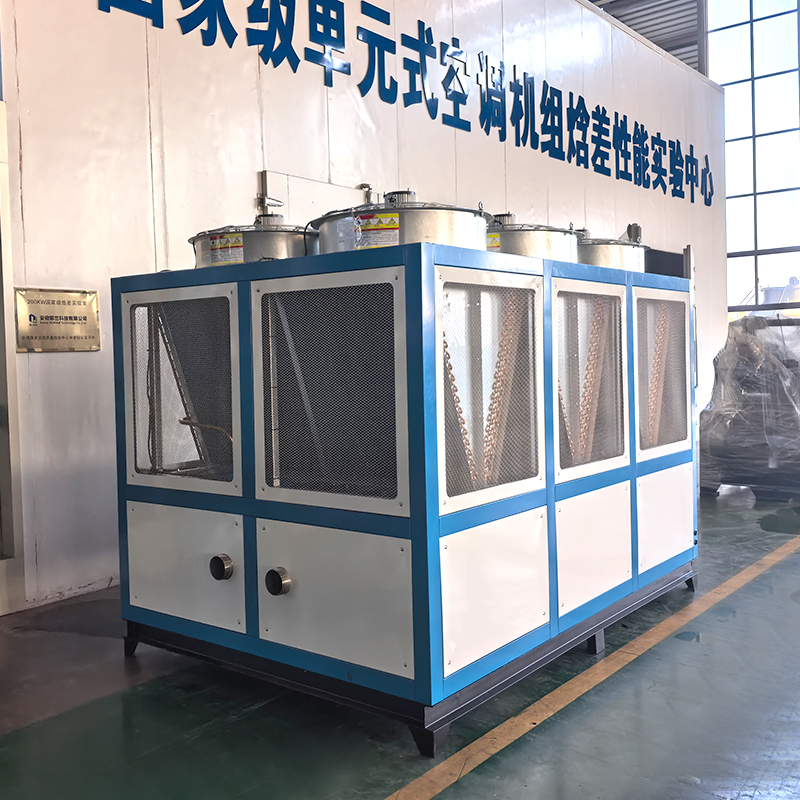
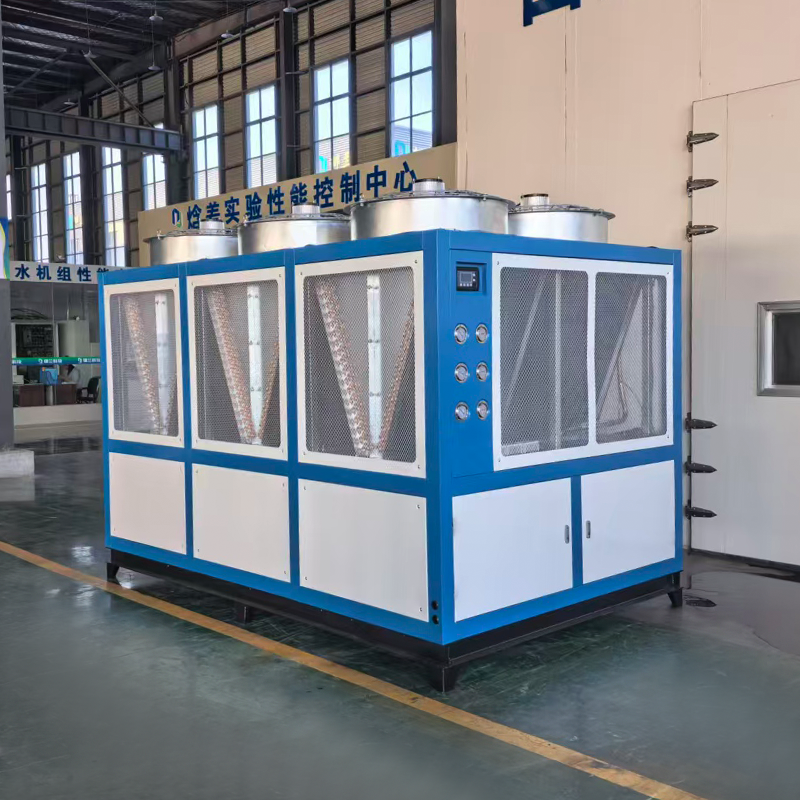
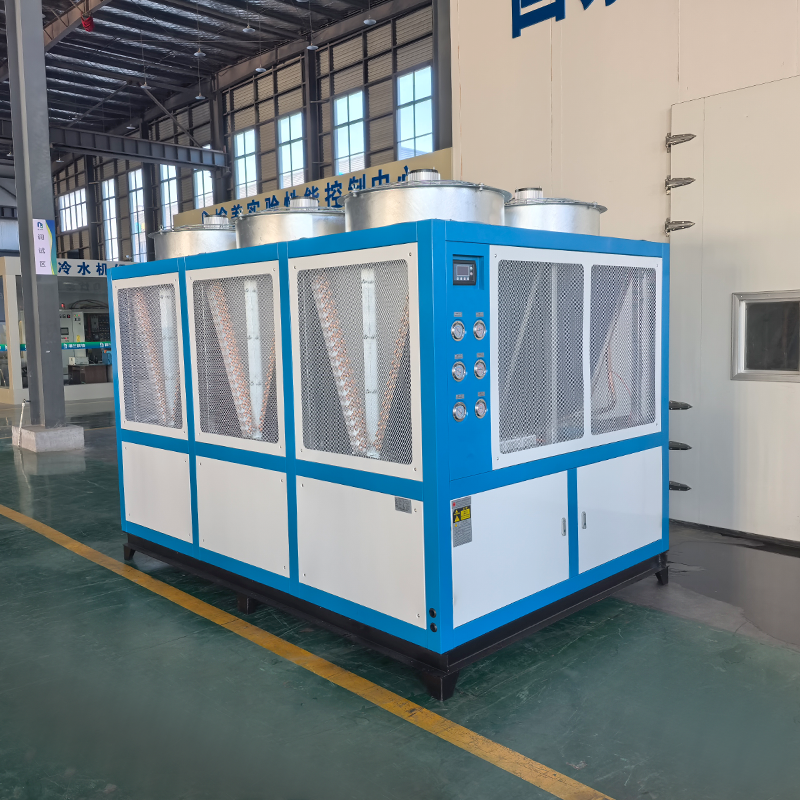
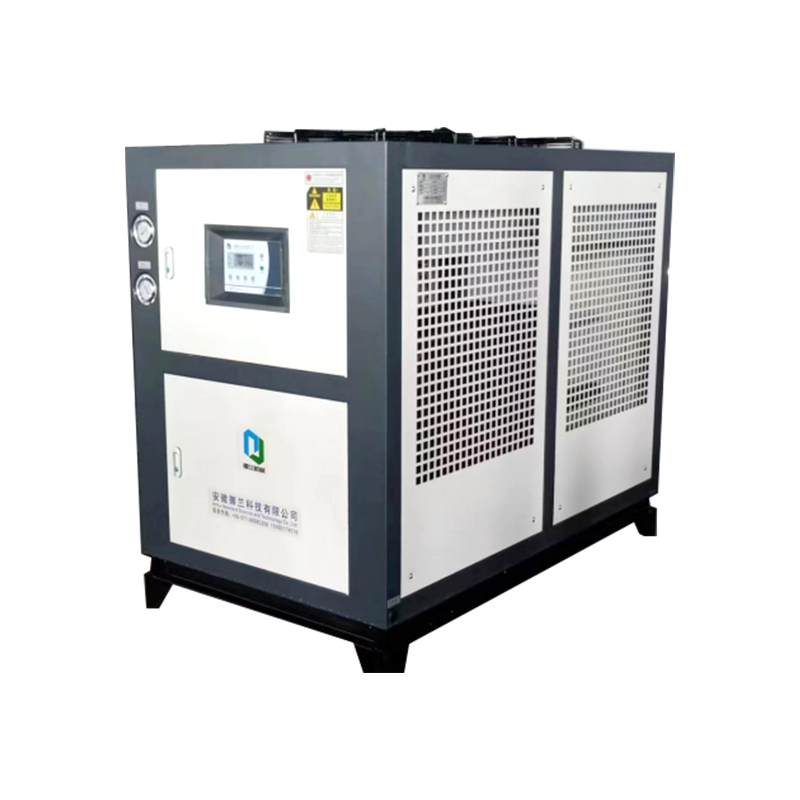
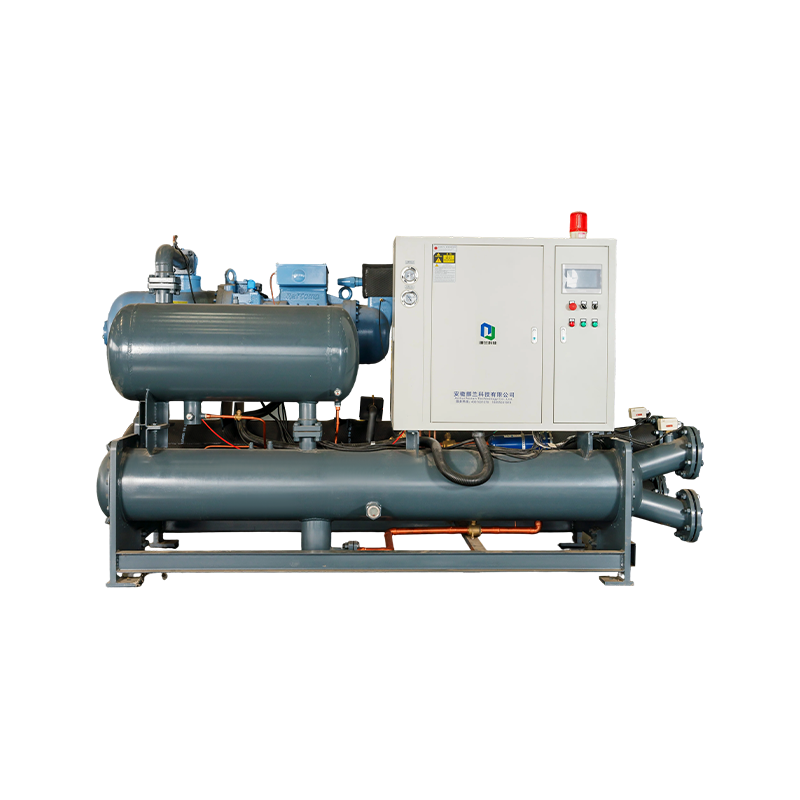
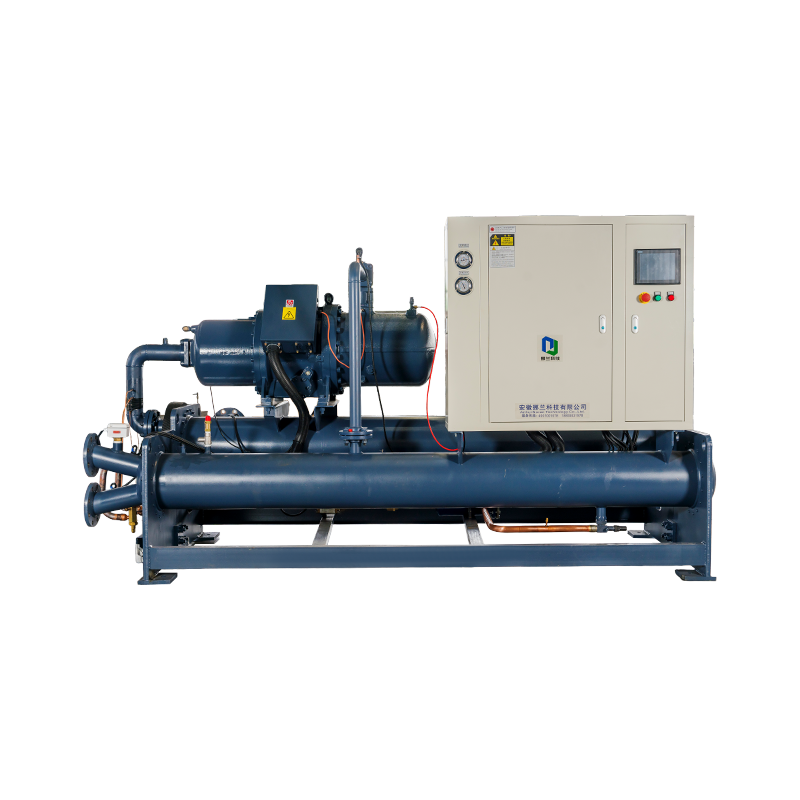
An air-cooled screw chiller consists of several interconnected components, including a semi-hermetic screw compressor, evaporator, air-cooled condenser, expansion device, refrigerant circuit, chilled water pump interface, and electrical control system. Each component contributes to the overall cooling process, while coordinated operation maintains the required water temperature under changing production loads.
The refrigeration cycle begins when the compressor draws in low-pressure refrigerant vapor and compresses it into a high-pressure, high-temperature state. The refrigerant then enters the condenser, where axial fans move ambient air across the condenser coils to remove heat. After releasing heat, the refrigerant passes through an expansion device, reducing its pressure and temperature before entering the evaporator. There, it absorbs heat from the circulating water and produces chilled water for industrial equipment or process systems.
The screw compressor uses rotating screw elements to compress refrigerant continuously. Compared with systems designed primarily for smaller cooling loads, screw technology is particularly suitable for larger capacities and sustained operation. An integrated controller monitors operating conditions and coordinates compressor operation, fan performance, and protective functions to support stable cooling.
2. Air-Cooled Cabinet Screw Chillers for General Industrial Cooling
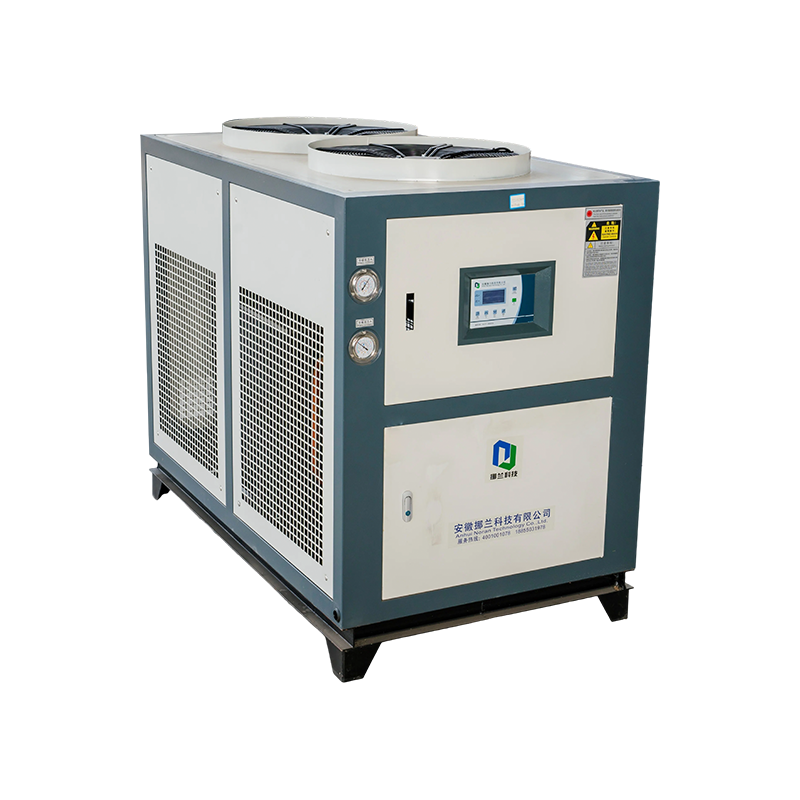
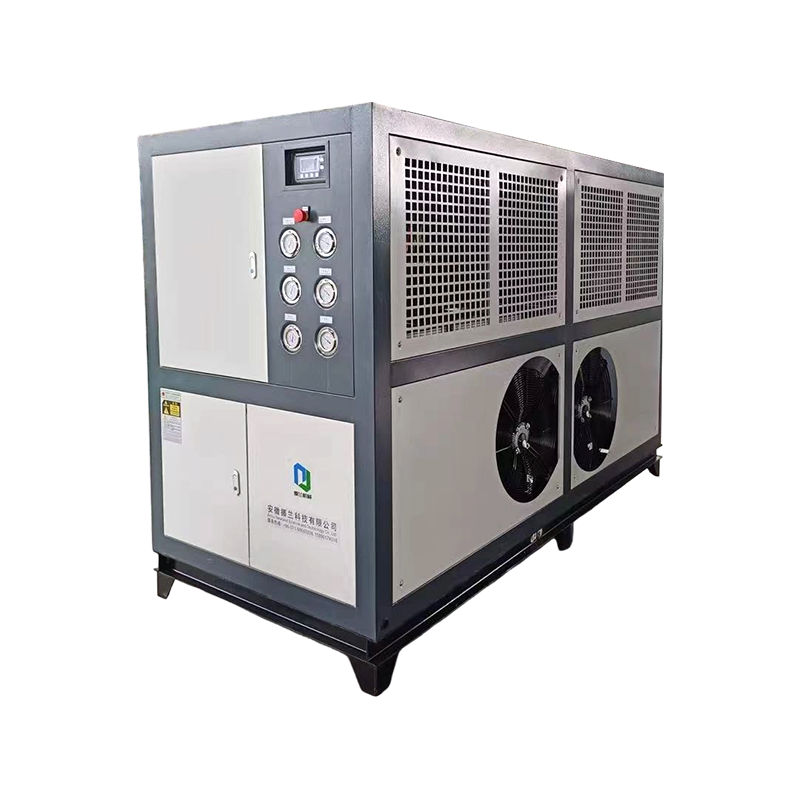
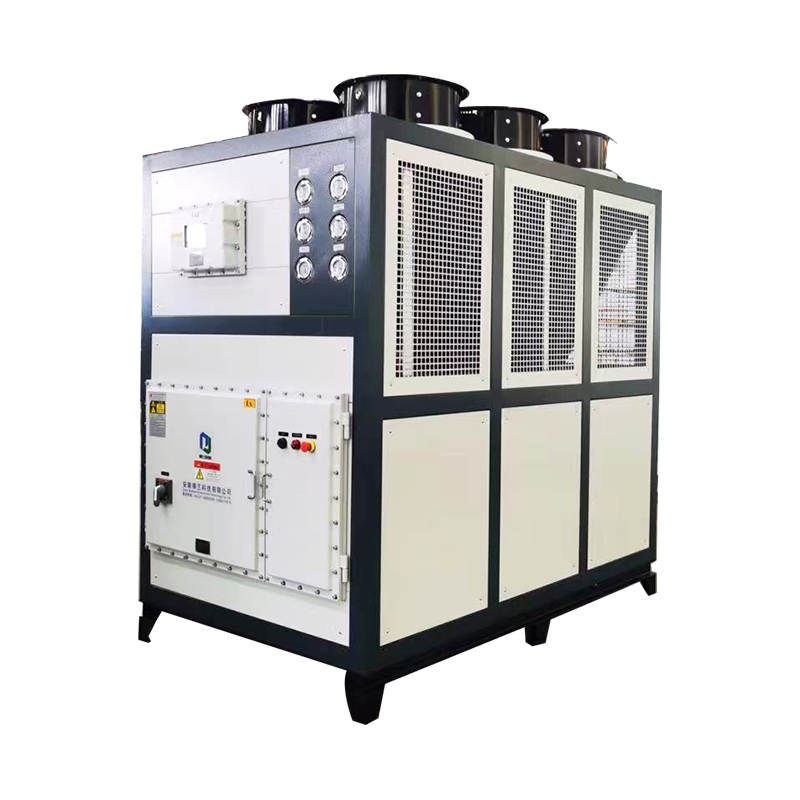
An air cooled screw cabinet chiller is an integrated refrigeration unit designed to provide chilled water for production equipment and industrial facilities. Its compressor, condenser, evaporator, and control components form a coordinated system, reducing the need for separate heat rejection equipment. This configuration is particularly useful for factories seeking a relatively straightforward installation without a cooling tower, cooling tower water treatment, or the associated circulation infrastructure.
Noran air-cooled cabinet screw chillers offer cooling capacities ranging from 128 kW to 545 kW, supporting medium to large equipment and factory workshops. The semi-hermetic screw compressor provides continuous refrigeration capacity, while microcomputer control helps maintain a water temperature accuracy of approximately plus or minus 1 degree Celsius under suitable operating conditions. Actual performance depends on ambient temperature, water flow, system configuration, and load conditions.
The cabinet configuration is suitable for plastic injection molding, blow molding, extrusion, plastic film production, and recycling systems. Chilled water can remove heat from molds, hydraulic systems, and production equipment, helping reduce temperature fluctuations that may influence product dimensions, cycle consistency, and manufacturing efficiency. For facilities with limited mechanical room space, the integrated outdoor design also reduces the amount of indoor space required for refrigeration equipment.
An air cooled industrial screw chiller offers a practical balance between cooling capacity, installation flexibility, and operational control. Its principal advantage over a water-cooled arrangement is the elimination of cooling towers and their associated water systems. However, sufficient airflow and outdoor clearance remain essential because condenser performance depends on the surrounding air temperature and heat dissipation conditions.
3. Air-Cooled Screw Chillers for Precision Process Cooling
Process cooling applications require more than general space cooling. They depend on a stable water supply to remove heat from equipment, materials, and production operations. An air cooled screw type chiller can serve these requirements by combining screw compression, controlled refrigerant circulation, and automatic monitoring. The system is particularly relevant when production equipment generates substantial heat or operates for extended periods.
In laser processing and CNC machining, chilled water can support temperature control for laser sources, spindles, and other heat-generating components. In chemical and pharmaceutical production, it can remove heat from reactors, mixing equipment, and process vessels. Food and beverage facilities may also use chilled water for processing systems that require consistent operating temperatures. The appropriate configuration depends on the required water temperature, heat load, flow rate, and cleanliness requirements of the connected equipment.
A custom air cooled screw chiller can be configured around the actual demands of a process rather than relying on nominal capacity alone. Engineering considerations may include seasonal ambient temperatures, operating schedules, temperature tolerance, installation clearances, and the characteristics of the secondary water circuit. For applications involving demanding temperature conditions, the selection process should also assess whether additional insulation, flow monitoring, or specialized control arrangements are necessary.
Noran develops industrial refrigeration equipment and customized temperature control solutions for different production environments. Founded in 2014, the company expanded its manufacturing operations in Anhui in 2021, establishing a production base of approximately 33,000 square meters in Mingguang City. Its engineering capabilities support the selection and configuration of refrigeration systems according to application requirements, helping industrial users match cooling equipment to actual process conditions.
4. Air-Cooled Screw Refrigeration Units for Powder Processing
Powder coating and powder processing can generate considerable heat during extrusion, grinding, milling, and process air handling. If temperatures fluctuate excessively, material characteristics and production consistency may be affected. An air cooled screw refrigeration unit provides chilled water that can be integrated with suitable heat exchangers and process equipment to remove unwanted heat and maintain more consistent operating conditions.
Compared with general-purpose cooling for individual machines, this application often requires closer coordination between the chiller and several connected production stages. Cooling demand may change as equipment starts, stops, or operates at different production rates. Correct capacity selection, adequate water circulation, and coordinated control help the refrigeration system respond to these variations without unnecessary cycling.
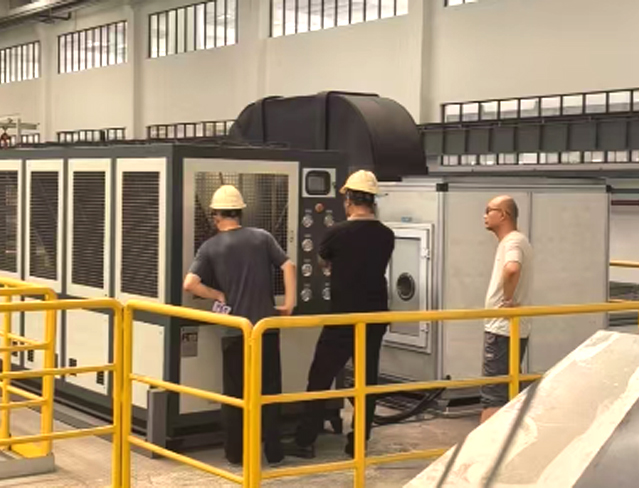
A powder coating factory in Vietnam illustrates the value of an air-cooled arrangement where the site has limited installation space and no cooling tower. Noran supplied an air-cooled screw chiller to provide a stable cooling water supply for the production process. The reported operational outcomes included improved cooling performance after extrusion, increased production capacity, and more consistent product quality. These results reflect the reported application and should not be interpreted as a guaranteed outcome for every facility.
For powder processing facilities, the main selection priorities include heat load, ambient operating conditions, process temperature requirements, and the layout of the water distribution system. An integrated air-cooled design can simplify site infrastructure, but adequate ventilation and regular condenser maintenance remain necessary to preserve performance.
5. Environmental Adaptability, Protection, and Installation Advantages
The defining installation advantage of an air cooled screw chiller is its ability to reject heat directly into ambient air. Without a cooling tower, the system generally requires fewer external components and avoids cooling tower water consumption and associated water treatment. This can be beneficial for factories with restricted site space, limited water availability, or a preference for simpler refrigeration infrastructure.
Environmental adaptability nevertheless depends on appropriate equipment placement. High ambient temperatures can reduce heat rejection efficiency, while blocked airflow or recirculation of hot discharge air can increase condensing pressure. Outdoor units should therefore be installed with sufficient clearance around condenser air inlets and outlets. The supporting foundation, electrical supply, drainage arrangements, and maintenance access should also be evaluated before installation.
Noran screw chillers incorporate multiple protective functions intended to support safe operation and reduce the risk of equipment damage. These include:
- High-pressure and low-pressure protection for the refrigeration circuit.
- Anti-freezing protection to help prevent excessively low water-side temperatures.
- Phase sequence protection for electrical supply conditions.
- Water system fault protection to respond to relevant circulation problems.
- Oil pressure differential protection for compressor lubrication conditions.
These safeguards complement rather than replace correct installation, commissioning, and scheduled maintenance. Condenser cleaning, refrigerant circuit inspection, water flow verification, and periodic checks of electrical and control components help maintain reliable operation. Industrial users should follow the manufacturer's operating instructions and establish maintenance intervals according to site conditions.
6. Product Category Comparison and Selection
Although cabinet screw chillers, process cooling configurations, and powder processing installations may use similar refrigeration principles, their selection priorities differ. The following comparison summarizes their typical roles rather than defining separate compressor technologies.
| Application category | Primary function | Typical application | Key selection factor |
| Cabinet screw chillers | General industrial chilled water supply | Injection molding and extrusion | Cooling capacity and installation space |
| Process cooling configurations | Temperature control for heat-sensitive equipment or processes | Laser cutting, CNC machining, chemical processing | Temperature accuracy and load variation |
| Powder processing installations | Heat removal across production stages | Powder coating extrusion and grinding | Process integration and continuous operation |
A systematic selection process helps ensure that the chosen equipment matches the facility's operating conditions.
- Determine the process heat load, required chilled water temperature, and expected water flow.
- Evaluate seasonal ambient temperatures, outdoor airflow, available installation space, and electrical requirements.
- Compare the required operating schedule with the unit's capacity and control capabilities.
- Confirm protective functions, maintenance access, commissioning requirements, and service support before purchase.
For project planning, buyers can review the air-cooled screw chiller unit product information to assess its suitability for the intended cooling application. A qualified air cooled screw chiller manufacturer should be able to clarify capacity selection, operating limitations, and configuration requirements. Likewise, an experienced air cooled screw chiller supplier can help coordinate technical information, delivery requirements, commissioning arrangements, and after-sales support.
Frequently Asked Questions
Q1: Why choose an air-cooled screw chiller instead of a water-cooled system?
An air-cooled system rejects heat directly into ambient air and does not require a cooling tower. This reduces water infrastructure and can simplify installation. A water-cooled system may be more suitable under some operating conditions, so the decision should consider energy consumption, climate, water availability, and lifecycle costs.
Q2: Which industries can use air-cooled screw chillers?
Typical applications include plastics manufacturing, laser and CNC machining, chemical and pharmaceutical production, food and beverage processing, and powder coating. The required capacity and configuration depend on each process's heat load and temperature requirements.
Q3: Can an air-cooled screw chiller support continuous factory operation?
Yes, when the equipment is correctly selected, installed, and maintained for the intended operating schedule. Capacity matching, condenser airflow, water circulation, protective controls, and regular maintenance all contribute to reliable continuous operation.
Q4: What should buyers discuss with a supplier before ordering?
Buyers should provide the required cooling capacity, chilled water temperatures, water flow, ambient conditions, daily operating schedule, installation limitations, and relevant process details. This information helps the supplier evaluate equipment suitability and identify any customization requirements.
Q5: Does Noran provide customized industrial refrigeration solutions?
Anhui Noran Technology Co., Ltd. specializes in industrial chillers, air-cooling systems, screw chillers, low-temperature refrigeration units, heat recovery systems, explosion-proof refrigeration equipment, and customized temperature control solutions. Its engineering approach considers cooling capacity, temperature accuracy, operating environment, and installation conditions when evaluating project requirements.
In conclusion, air-cooled screw chillers offer an integrated approach to industrial refrigeration where stable chilled water supply and reduced dependence on cooling tower infrastructure are important. By understanding the refrigeration cycle, matching the equipment to the process, and providing suitable installation and maintenance conditions, industrial facilities can establish a cooling system that supports production stability and long-term operational reliability.


