
 English
  Français
  Español
  Português
  عربى
عربى  Türk
Türk  हिंदी
हिंदी 



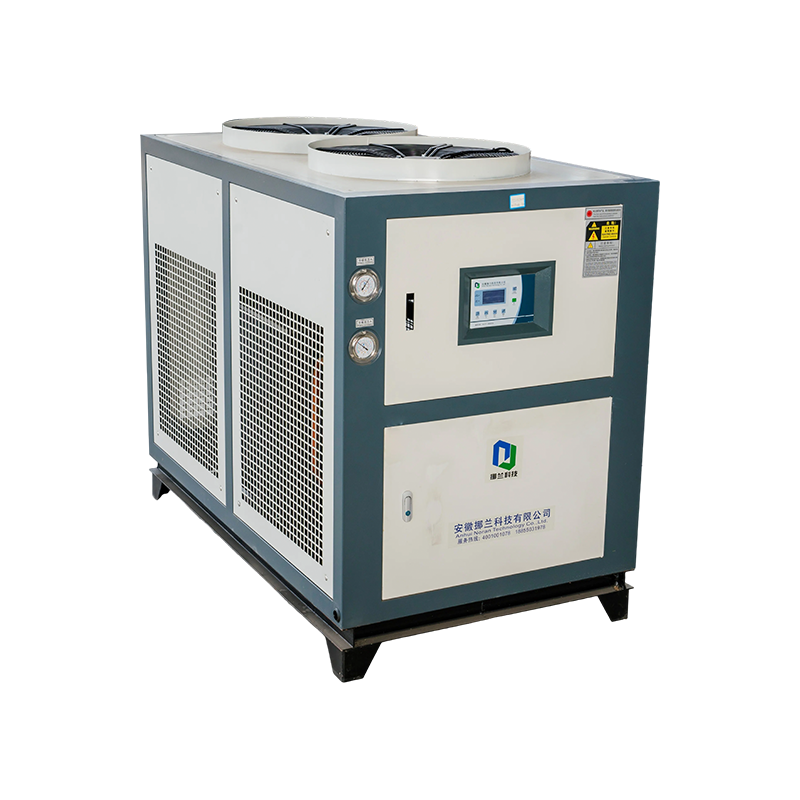
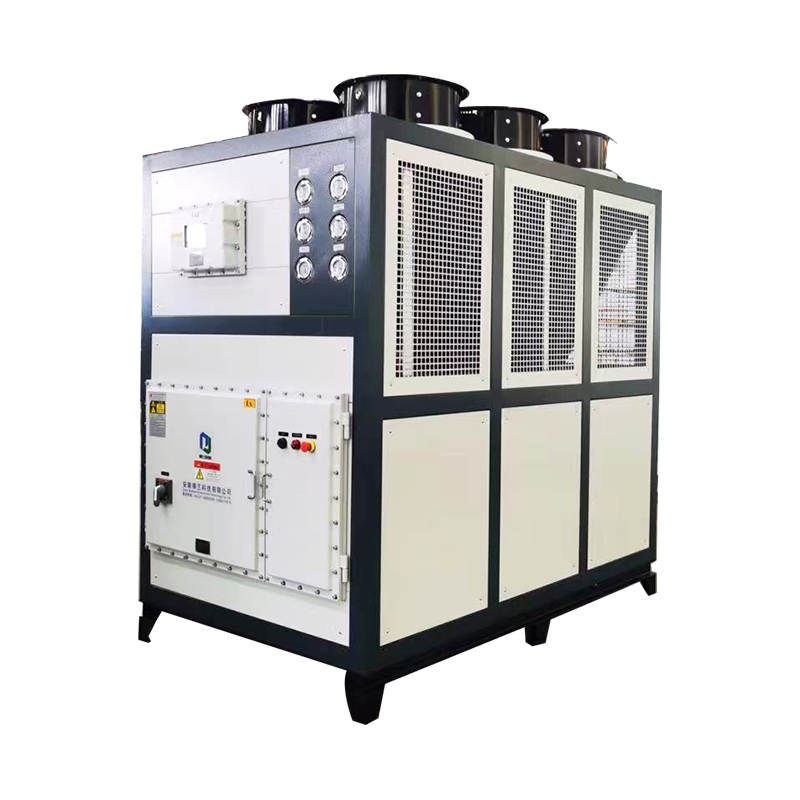
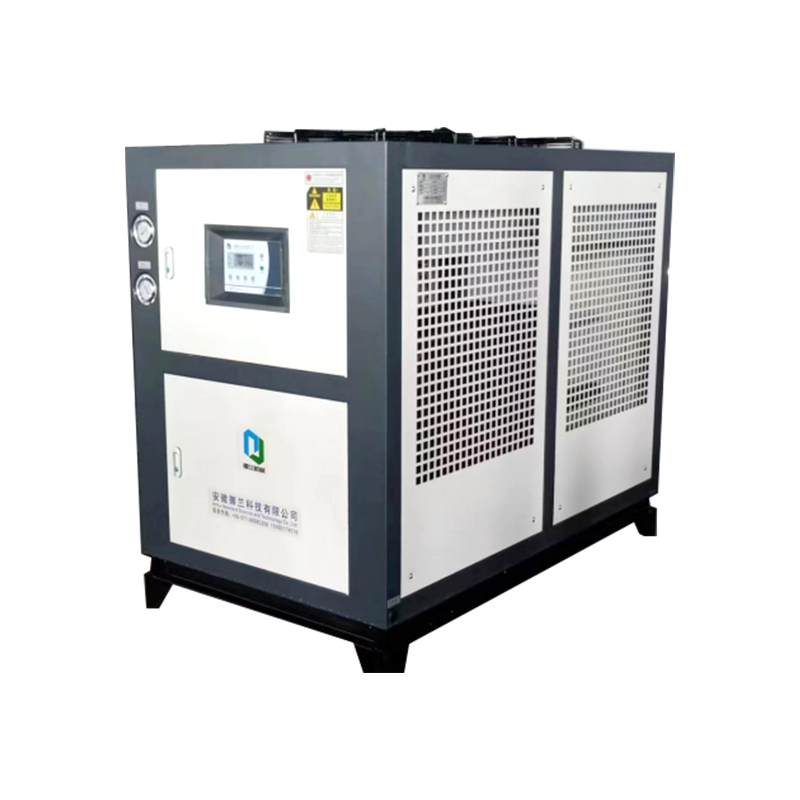
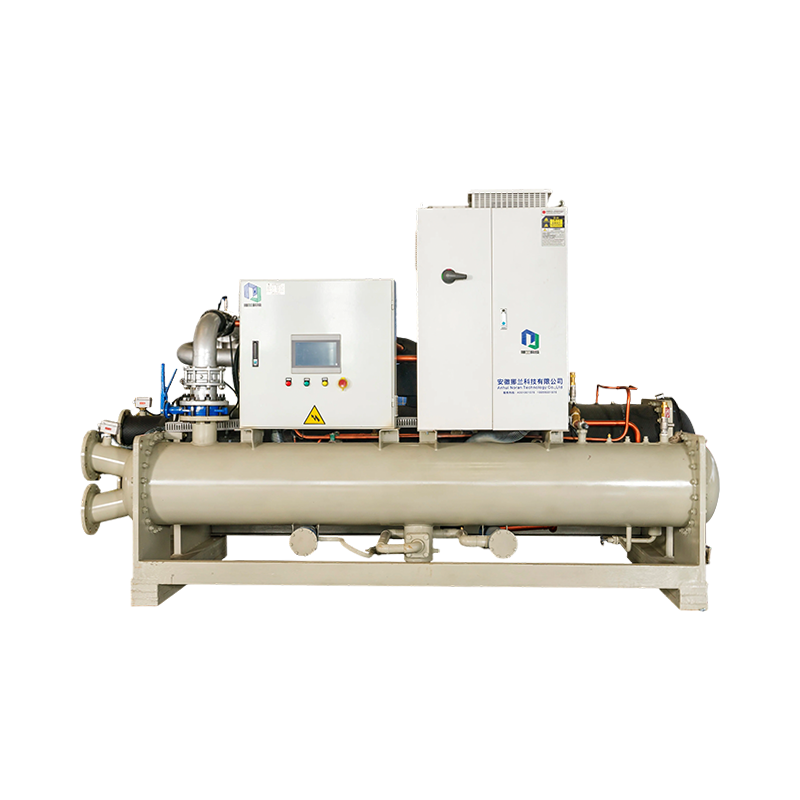
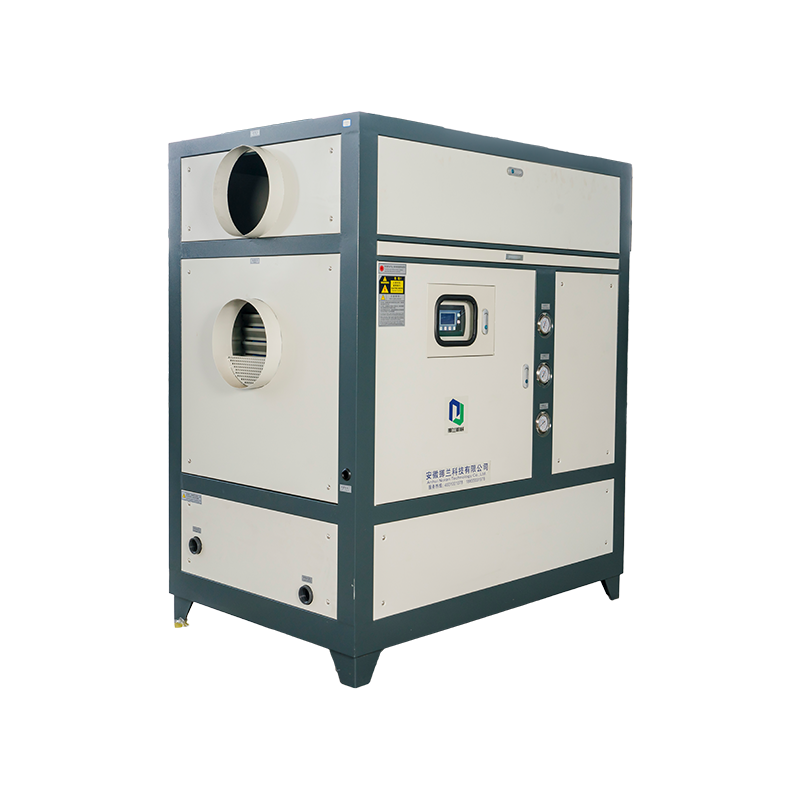















Why Is an Air Cooled Oil Chiller Important for Hydraulic Systems?
In industrial applications, hydraulic systems generate heat through fluid compression, friction, pressure losses, and mechanical movement. If this heat is not effectively removed, hydraulic oil may exceed its recommended operating temperature, affecting viscosity, lubrication, sealing performance, and component service life. An air cooled oil chiller provides controlled cooling to help maintain suitable oil temperatures, stabilize hydraulic performance, and reduce the risk of overheating during continuous operation.
1. Why Do Hydraulic Systems Need Oil Cooling?
Hydraulic systems transfer power through pressurized fluid. During operation, pumps, valves, actuators, and pipelines generate heat due to mechanical friction, internal leakage, fluid resistance, and pressure drops. The amount of heat depends on system pressure, operating cycles, equipment design, and ambient conditions.
When oil temperature rises excessively, its viscosity decreases. Oil that becomes too thin may provide insufficient lubrication, increase internal leakage, and accelerate wear on pumps and other hydraulic components. Excessive heat can also contribute to oil oxidation, sludge formation, seal deterioration, and reduced fluid service life.
An air cooled oil chiller removes excess heat from hydraulic oil and helps maintain a more stable operating temperature. It is particularly useful for hydraulic equipment that operates under heavy loads, frequent cycling, or extended production schedules.
2. How Does an Air Cooled Oil Chiller Work?
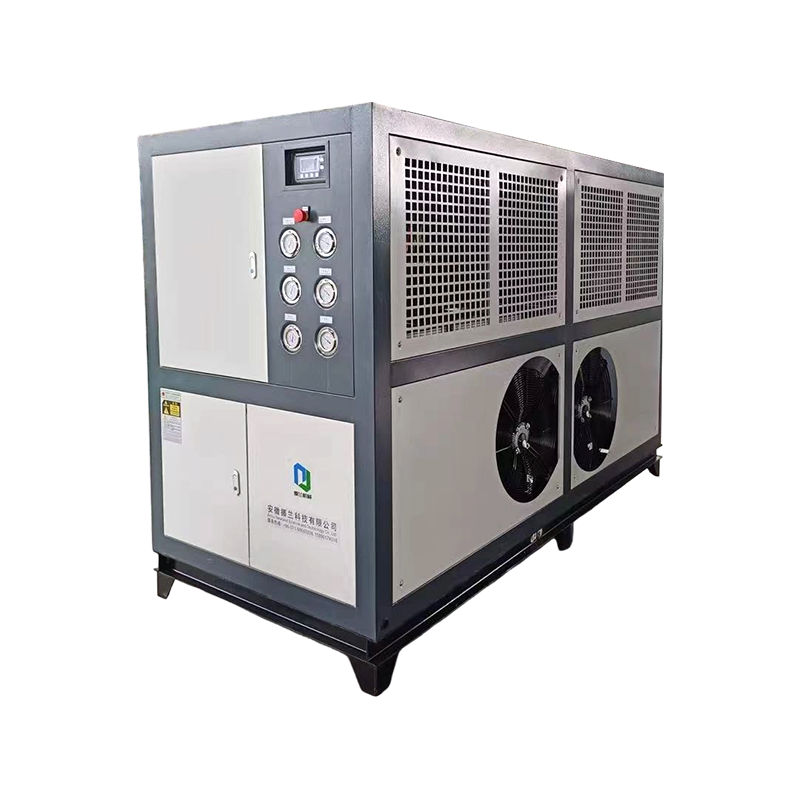
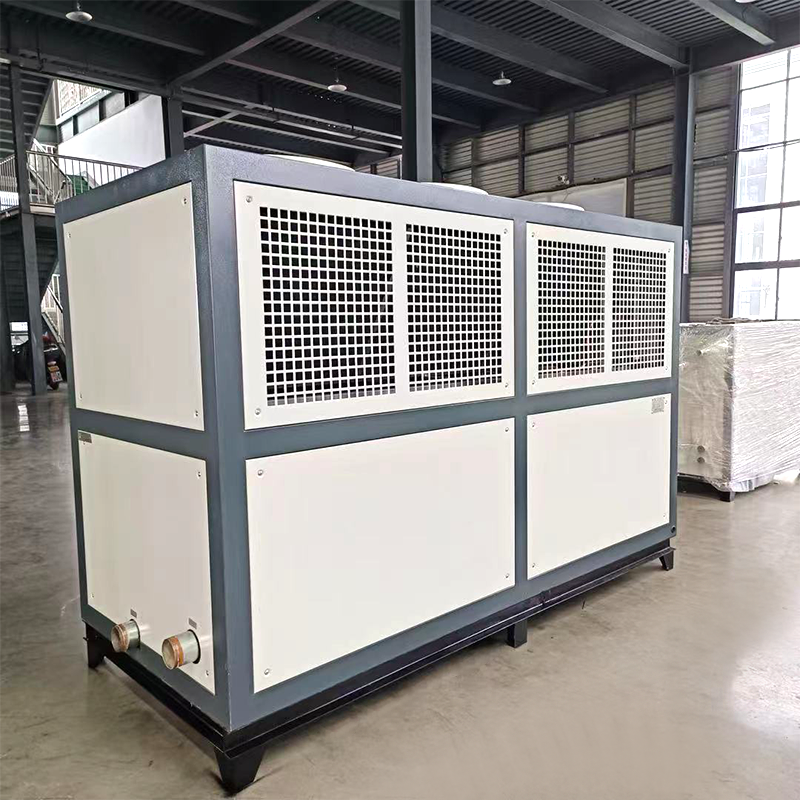
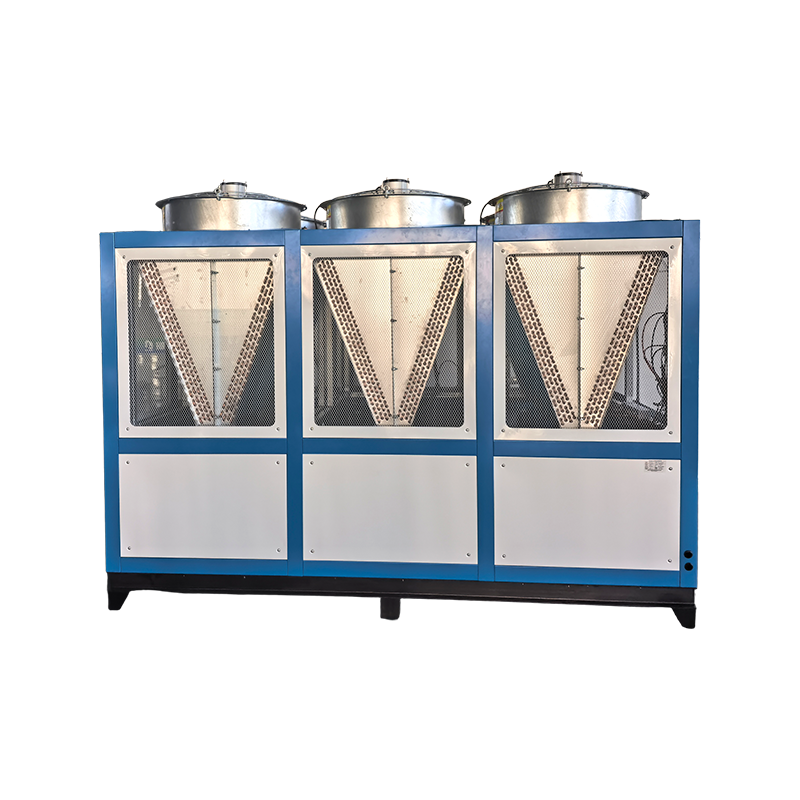
An air cooled oil chiller uses a refrigeration cycle to remove heat from hydraulic oil. Its main components typically include an oil heat exchanger, refrigeration compressor, condenser, cooling fan, expansion device, and temperature controller. The exact configuration varies according to cooling capacity and application requirements.
The operating process generally follows these steps:
- Oil circulation: Heated hydraulic oil flows from the hydraulic circuit or oil reservoir into the chiller.
- Heat exchange: The oil transfers heat to the refrigerant through a heat exchanger without direct contact between the two fluids.
- Refrigeration: The refrigerant absorbs heat, and the refrigeration circuit carries that heat toward the condenser.
- Heat rejection: The condenser and fan release the absorbed heat into the surrounding air.
- Temperature regulation: The control system monitors operating conditions and adjusts cooling operation to maintain the target oil temperature.
Unlike water-cooled equipment, an air cooled oil chiller uses ambient air to reject heat, eliminating the need for a dedicated cooling-water supply. This simplifies installation in facilities where cooling water is unavailable or difficult to manage.
3. What Are the Main Benefits of an Air Cooled Oil Chiller?
An air cooled oil chiller supports hydraulic system stability in several important ways.
Maintaining Hydraulic Oil Viscosity
Hydraulic oil must remain within an appropriate temperature range to provide effective lubrication, power transmission, and sealing. By limiting temperature fluctuations, the chiller helps the oil maintain more consistent operating characteristics. The target temperature should be selected according to the oil grade and the hydraulic equipment manufacturer’s requirements.
Reducing Component Wear
High oil temperatures can accelerate oxidation and contribute to the deterioration of seals, hoses, and other fluid-contact components. Stable temperature control helps reduce thermal stress and supports more reliable operation of pumps, valves, cylinders, and hydraulic power units.
Improving Production Stability
Overheating may cause equipment performance to fluctuate or require production interruptions for cooling and maintenance. A properly selected hydraulic oil chiller helps control heat accumulation, making it easier for hydraulic equipment to operate consistently during demanding production cycles.
Supporting Oil Service Life
Elevated temperatures accelerate many oil degradation processes. Maintaining a suitable temperature can slow thermal oxidation and help preserve oil properties. However, cooling does not remove contaminants or eliminate the need for filtration, oil analysis, and scheduled maintenance.
Simplifying Cooling Infrastructure
An air cooled oil chiller rejects heat directly to ambient air. It generally avoids the cooling towers, cooling-water circulation systems, and water treatment associated with many water-cooled arrangements. This can reduce infrastructure requirements, although performance still depends on ambient temperature, airflow, and installation conditions.
4. Which Hydraulic Applications Need an Air Cooled Oil Chiller?
Air cooled oil chillers are suitable for hydraulic equipment with significant or fluctuating heat loads. Common applications include:
- Hydraulic presses: Control oil temperature during repeated pressing cycles and sustained high-pressure operation.
- Injection molding machines: Help manage hydraulic heat generated during clamping, injection, and mold movement.
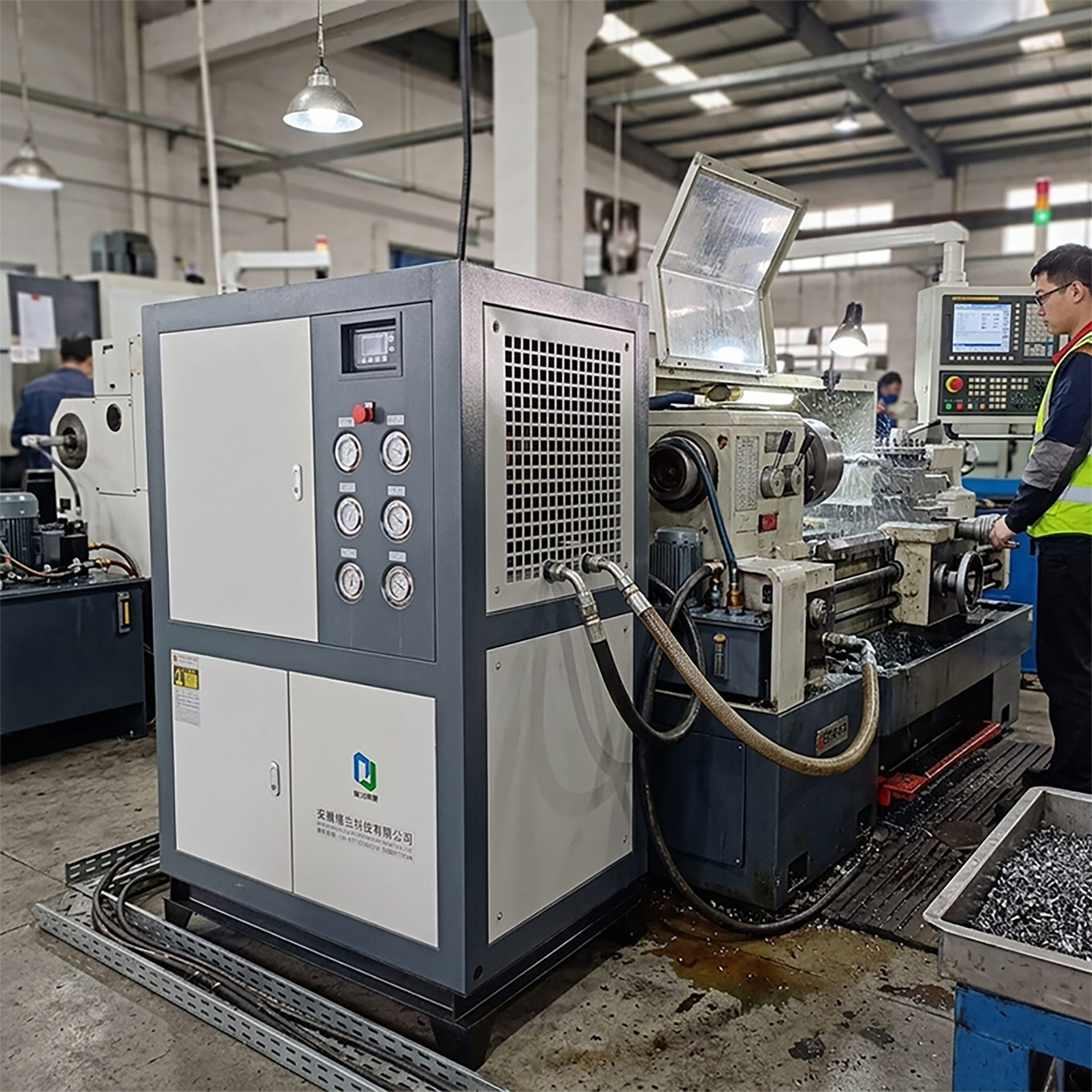
- CNC machine tools: Support stable hydraulic operation in clamping systems, hydraulic power units, and auxiliary circuits.
- Die-casting equipment: Help remove heat from hydraulic systems exposed to frequent operating cycles.
- Industrial machinery: Provide temperature control for hydraulic lifting equipment, forming machines, and automated production lines.
- Mobile and specialized hydraulic equipment: Support thermal management where a suitable air-cooled configuration can be integrated into the available space.
The appropriate chiller depends on the system’s heat generation, oil flow rate, required outlet temperature, ambient conditions, and operating schedule. Not every hydraulic system requires refrigeration; some low-heat-load applications can operate effectively with simpler heat exchangers.
5. How Should You Select a Hydraulic Oil Chiller?
Selecting a hydraulic oil chiller requires more than matching the equipment to the hydraulic reservoir capacity. The cooling system must remove the actual heat generated by the application while maintaining the required oil temperature.
| Selection factor | What to evaluate | Why it matters |
|---|---|---|
| Cooling capacity | Actual hydraulic heat load and operating conditions | Prevents insufficient cooling or unnecessary oversizing |
| Oil flow rate | Required circulation rate and allowable pressure drop | Ensures effective heat transfer without disrupting the hydraulic circuit |
| Temperature range | Target oil temperature and ambient temperature | Determines whether the refrigeration system can meet operating requirements |
| Oil compatibility | Oil type, viscosity, and heat exchanger materials | Supports fluid compatibility and reliable heat transfer |
| Installation environment | Ventilation, dust, humidity, and available space | Influences condenser performance and maintenance needs |
| Control requirements | Temperature sensors, alarms, and operating logic | Helps maintain stable temperatures and identify abnormal conditions |
An oil cooled below its appropriate operating range may become too viscous, increasing flow resistance and potentially affecting startup performance. Therefore, the objective is not to achieve the lowest possible oil temperature, but to maintain the correct temperature for the hydraulic system.
When comparing equipment, buyers should also consider energy consumption, noise, service accessibility, protective functions, and the availability of customized configurations.
6. Air Cooled Oil Chiller vs. Water-Cooled Oil Cooling
Both air-cooled and water-cooled systems can remove heat from hydraulic oil, but their heat-rejection methods and infrastructure requirements differ.
| Comparison item | Air cooled oil chiller | Water-cooled oil chiller |
|---|---|---|
| Heat rejection | Uses ambient air and a condenser fan | Transfers heat to a cooling-water circuit |
| Water supply | No dedicated cooling-water supply required | Requires a suitable water circuit |
| Installation | Often simpler where ventilation is adequate | Requires water piping and supporting infrastructure |
| Ambient influence | Cooling performance can decline at high outdoor temperatures | Depends on cooling-water temperature and system design |
| Maintenance focus | Condenser cleanliness, fan condition, and refrigerant circuit | Water quality, scaling, corrosion, and water-side heat transfer |
| Typical consideration | Facilities prioritizing installation flexibility | Facilities with suitable cooling-water infrastructure |
The choice should reflect site conditions, required cooling capacity, operating costs, and maintenance resources rather than relying on one configuration for every application.
7. Why Does the Oil Temperature Control System Matter?
An oil temperature control system coordinates temperature monitoring and cooling operation. Sensors measure oil temperature, while the controller regulates chiller operation according to the configured setpoint and control logic. Depending on the design, the system may also provide high-temperature alarms, fault indications, and protective shutdown functions.
Correct control settings help prevent unnecessary compressor cycling and reduce excessive temperature fluctuations. Sensor placement, oil circulation, and heat exchanger performance also influence control accuracy.
Routine maintenance remains essential. Operators should inspect air filters and condenser surfaces where fitted, check fans and refrigerant-system alarms, monitor oil cleanliness, and verify that the oil flow rate remains within the specified range. Abnormal temperature increases should be investigated rather than addressed solely by lowering the setpoint.
8. How Can Noran Support Customized Industrial Cooling Requirements?
Anhui Noran Technology Co., Ltd. specializes in industrial refrigeration equipment and customized temperature control solutions. Its product portfolio includes industrial chillers, air cooling systems, screw chillers, low-temperature refrigeration units, heat recovery systems, and explosion-proof refrigeration equipment.
With industrial refrigeration experience accumulated since 2014, Noran operates a 50-mu production base and a 12,000-square-meter processing center, with an annual output exceeding 3,000 units. Its engineering capabilities cover CAD design, core component selection, intelligent control systems, and factory testing.
For hydraulic cooling applications, Anhui Noran Technology Co., Ltd. can assess operating conditions and discuss suitable cooling configurations based on heat load, oil flow, target temperature, installation space, and environmental requirements. Customization options may include special voltage configurations, explosion protection, and combined heating and cooling temperature control where appropriate.
As a hydraulic oil chiller supplier, Noran can also support project-specific engineering requirements rather than relying exclusively on standard equipment specifications. Buyers should provide relevant operating parameters to help determine the required cooling capacity and control configuration.
Frequently Asked Questions
1. What is an air cooled oil chiller used for?
An air cooled oil chiller removes excess heat from hydraulic oil and maintains a suitable operating temperature. It helps stabilize oil viscosity, reduce thermal stress, and support reliable hydraulic equipment operation.
2. How do I calculate the cooling capacity required for a hydraulic oil chiller?
Start by evaluating the hydraulic system’s heat generation, oil flow rate, inlet and target outlet temperatures, operating cycle, and ambient conditions. Actual heat-load calculations and an appropriate design margin should be used to select the chiller.
3. What is the difference between an air cooled oil chiller and a hydraulic oil cooler?
A hydraulic oil cooler generally transfers heat from oil to air or water without necessarily using a refrigeration cycle. An air cooled oil chiller uses active refrigeration to provide more controlled cooling, particularly when ambient conditions or heat loads make a conventional cooler insufficient.
4. What oil temperature should a hydraulic system maintain?
The suitable temperature depends on the hydraulic oil grade, equipment design, seals, and operating conditions. Follow the hydraulic equipment manufacturer’s recommended range rather than applying one universal setpoint.
5. How can I choose a reliable hydraulic oil chiller supplier?
Evaluate the supplier’s industrial refrigeration experience, cooling-capacity selection process, temperature-control capabilities, quality testing, customization options, and after-sales support. Providing detailed hydraulic operating parameters helps the supplier recommend an appropriate solution.


