
 English
  Français
  Español
  Português
  عربى
عربى  Türk
Türk  हिंदी
हिंदी 



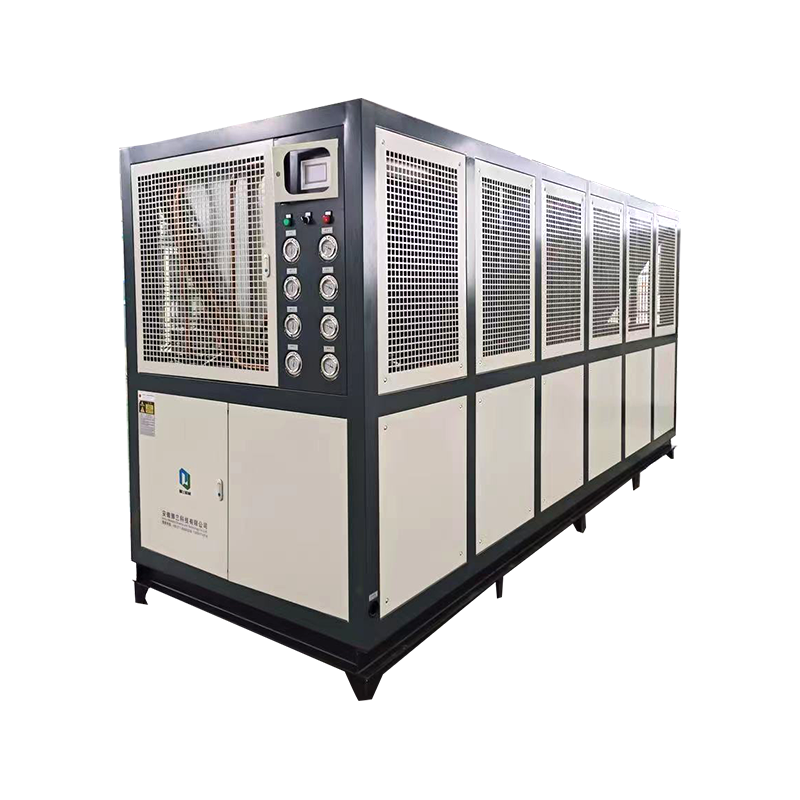
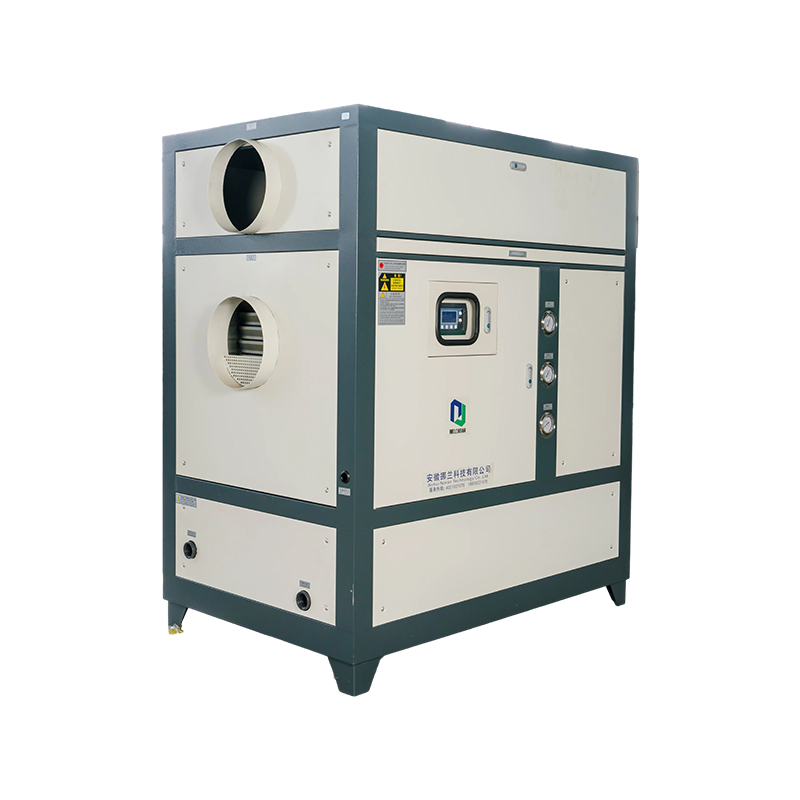















How Does a Closed Circuit Cooling Tower Work? A Complete Guide to Its Operating Principle
How does a closed circuit cooling tower remove heat from industrial equipment, and why is it suitable for applications requiring reliable temperature control and reduced fluid contamination? Understanding its operating principle, main components, and heat transfer process helps industrial users select an appropriate cooling solution for their systems.
What Is a Closed Circuit Cooling Tower?
A closed circuit cooling tower is a heat rejection device that cools process fluid through a heat exchanger without directly exposing the fluid to the external environment. Unlike an open cooling tower, which allows the circulating water to contact air directly, a closed circuit system keeps the process fluid inside a sealed coil or heat exchanger.
During operation, the process fluid flows through the internal heat exchange coil, while water is sprayed over the coil’s external surface and air passes through the unit. Heat transfers from the process fluid to the coil wall, then to the spray water and surrounding air. Evaporation removes a portion of this heat, allowing the process fluid to return to the equipment at a lower temperature.
This design makes a closed loop cooling tower suitable for industrial processes that require stable cooling conditions, cleaner circulating fluid, and reduced exposure to environmental contaminants.
How Does a Closed Circuit Cooling Tower Work?
The operating principle of a closed circuit cooling tower is based on indirect heat exchange combined with evaporative cooling. Its working process can be divided into four main stages.
Step 1: Hot Process Fluid Enters the Heat Exchanger
Hot water, glycol solution, or another compatible process fluid enters the cooling tower through an enclosed coil. The fluid carries heat generated by industrial equipment, production processes, or refrigeration systems.
Because the process fluid remains inside the coil, it does not directly mix with spray water or ambient air. This separation helps maintain fluid quality and reduces the risk of contamination within the process loop.
Step 2: Heat Transfers Through the Coil Wall
As the hot fluid moves through the heat exchanger, heat passes through the coil wall to the water sprayed over its external surface. The efficiency of this process depends on factors such as heat exchanger material, coil surface area, fluid flow rate, and temperature difference.
Common coil materials include steel, galvanized steel, and stainless steel. The appropriate material depends on the fluid properties, operating conditions, and corrosion requirements.
Step 3: Spray Water and Air Remove Heat
The spray water absorbs heat from the coil and releases part of it through evaporation. At the same time, fans move air across the heat exchange section, supporting evaporation and carrying heat and moisture away from the unit.
This combined process enables a closed circuit cooling tower to reject heat efficiently without requiring the entire process fluid inventory to be exposed to the atmosphere.
Step 4: Cooled Fluid Returns to the Process
After losing heat, the process fluid leaves the coil and returns to the industrial equipment. The cycle continues as long as cooling is required.
A control system can regulate fan speed, spray water operation, and other operating parameters according to cooling demand and ambient conditions. Proper control helps maintain the required process temperature while managing energy and water consumption.
Main Components and Their Functions
An industrial closed circuit cooling tower consists of several components that work together to achieve reliable heat rejection.
| Component | Main Function |
|---|---|
| Heat exchanger coil | Transfers heat from the enclosed process fluid to the external cooling medium |
| Spray water system | Distributes water over the coil surface to support heat transfer and evaporation |
| Axial or centrifugal fan | Moves air through the cooling section |
| Water collection basin | Collects and recirculates spray water |
| Drift eliminator | Reduces the amount of water droplets carried out with exhaust air |
| Control system | Regulates operating conditions according to cooling demand |
| Casing and support structure | Protects internal components and provides structural stability |
The performance of the complete unit depends on the coordination of these components rather than on any single component alone.
Closed Circuit Cooling Tower vs. Open Cooling Tower
Understanding the difference between open and closed cooling systems is essential when choosing equipment for industrial applications.
| Comparison | Closed Circuit Cooling Tower | Open Cooling Tower |
|---|---|---|
| Process fluid contact | Remains enclosed within a coil | Directly contacts air |
| Contamination risk | Lower risk of external contamination in the process loop | Greater exposure to airborne contaminants |
| Fluid quality | Helps preserve process fluid cleanliness | Requires attention to circulating water quality |
| Heat transfer method | Indirect heat exchange with evaporative cooling | Direct contact between water and air |
| Maintenance focus | Coil condition, spray system, fan, and water quality | Water distribution, basin, fill, and water treatment |
| Typical applications | Sensitive industrial cooling loops and closed process systems | General-purpose water cooling applications |
A closed circuit cooling tower may require a higher initial investment than some open systems, depending on capacity, materials, and configuration. However, its enclosed process loop can reduce contamination-related maintenance and help protect sensitive equipment.
What Factors Affect Cooling Tower Performance?
The performance of a closed circuit water cooling tower depends on several operating and design factors.
Ambient wet-bulb temperature: Evaporative cooling performance is strongly influenced by the entering air’s wet-bulb temperature. Higher wet-bulb temperatures generally reduce the system’s ability to cool the process fluid.
Heat exchanger design: Coil surface area, tube arrangement, material, and internal flow characteristics influence heat transfer and pressure drop.
Airflow and water distribution: Appropriate fan operation and uniform spray coverage help maintain effective heat exchange. Poor distribution, blocked nozzles, or restricted airflow can reduce cooling capacity.
Process fluid properties: Fluid type, concentration, flow rate, and inlet temperature affect the required heat transfer area and overall system performance.
Water quality and maintenance: Scale, corrosion, biological growth, and debris can impair heat transfer or damage components. Regular inspection, appropriate water treatment, and cleaning are essential for long-term operation.
When evaluating an industrial cooling tower, users should consider the required cooling capacity, inlet and outlet temperatures, ambient design conditions, and available installation space.
Where Are Closed Circuit Cooling Towers Used?
Closed circuit cooling towers are commonly used in industrial processes where heat must be removed while keeping the process fluid separate from the external cooling environment.
Typical applications include:
- Plastics manufacturing: Cooling process equipment and auxiliary systems used in production.
- Electronics and photovoltaics: Supporting temperature control for manufacturing equipment and associated cooling loops.
- Chemical processing: Removing heat from compatible process systems where fluid separation is beneficial.
- Industrial painting and powder coating: Providing cooling for production equipment and temperature-sensitive auxiliary systems.
- Pharmaceutical manufacturing: Supporting process cooling where controlled operating conditions and fluid cleanliness are important.
- Industrial refrigeration: Rejecting heat from compatible refrigeration and temperature-control systems.
The final configuration should be selected according to the actual heat load, required fluid temperatures, site conditions, and process requirements.
How to Choose a Closed Circuit Cooling Tower Manufacturer
Selecting a suitable closed circuit cooling tower manufacturer involves more than comparing nominal cooling capacity or purchase price. Buyers should evaluate the supplier’s engineering capabilities and its ability to match the equipment to the intended application.
Key considerations include:
- Cooling capacity: Confirm that the proposed unit can handle the design heat load under specified ambient conditions.
- Heat exchanger materials: Check material compatibility with the process fluid and operating environment.
- Energy consumption: Evaluate fan and pump power, control strategies, and expected operating hours.
- Water management: Understand spray water consumption, water treatment requirements, and maintenance needs.
- Customization capability: Confirm whether the supplier can accommodate installation constraints, special temperature requirements, and site-specific operating conditions.
- Technical support: Review the availability of commissioning guidance, maintenance documentation, and after-sales service.
Anhui Noran Technology Co., Ltd. specializes in industrial refrigeration equipment and customized temperature-control solutions. Its product range includes industrial chillers, air cooling systems, screw chillers, low-temperature refrigeration units, heat recovery systems, and explosion-proof refrigeration equipment.
With experience serving industries such as plastics, electronics, photovoltaics, pharmaceuticals, and chemical processing, Noran develops cooling solutions according to customer requirements, including cooling capacity, temperature accuracy, operating environment, and installation conditions. For projects involving a closed circuit cooling tower or an integrated industrial cooling system, these engineering factors help determine the appropriate equipment configuration.
As an industrial refrigeration equipment manufacturer, Anhui Noran Technology Co., Ltd. focuses on energy-saving technologies, intelligent temperature control, and customized system integration. Buyers evaluating a closed loop cooling tower supplier should confirm the proposed design specifications and verify that the complete system meets their process requirements.
Conclusion
A closed circuit cooling tower works by transferring heat from an enclosed process fluid through a heat exchanger coil to spray water and air. Evaporation and airflow then remove the heat, allowing the cooled fluid to return to the process without direct exposure to the external environment.
Its main benefits include reduced process fluid contamination, compatibility with sensitive cooling loops, and flexible integration into industrial temperature-control systems. Actual performance depends on heat exchanger design, ambient conditions, water management, and operating controls.
For industrial users, selecting the right cooling equipment requires a clear understanding of heat load, fluid characteristics, operating temperatures, and maintenance requirements. Working with an experienced manufacturer such as Anhui Noran Technology Co., Ltd. can help align equipment configuration with the needs of the application.
FAQ
1. What is the main operating principle of a closed circuit cooling tower?
It uses indirect heat exchange and evaporative cooling. Process fluid passes through an enclosed coil, while spray water and airflow remove heat from the coil’s external surface.
2. Does a closed circuit cooling tower use water?
Yes. Many designs use spray water that evaporates to remove heat. Additional water may be required to replace evaporation, drift, and blowdown losses. Water consumption varies with heat load, ambient conditions, and system design.
3. What is the difference between a closed loop cooling tower and a closed circuit cooling tower?
The terms are often used interchangeably to describe equipment that keeps process fluid enclosed during heat rejection. However, terminology can vary by manufacturer, so buyers should confirm the equipment’s actual heat exchanger arrangement and operating principle.
4. Which industries use industrial closed circuit cooling towers?
Typical applications include plastics manufacturing, electronics, photovoltaics, chemical processing, pharmaceuticals, industrial painting, and industrial refrigeration, depending on the required cooling conditions.
5. How do I select a closed circuit cooling tower supplier?
Evaluate cooling capacity, design temperatures, ambient conditions, coil materials, energy consumption, water management, customization capabilities, and technical support. Request a design proposal based on your actual process requirements before making a purchasing decision.


